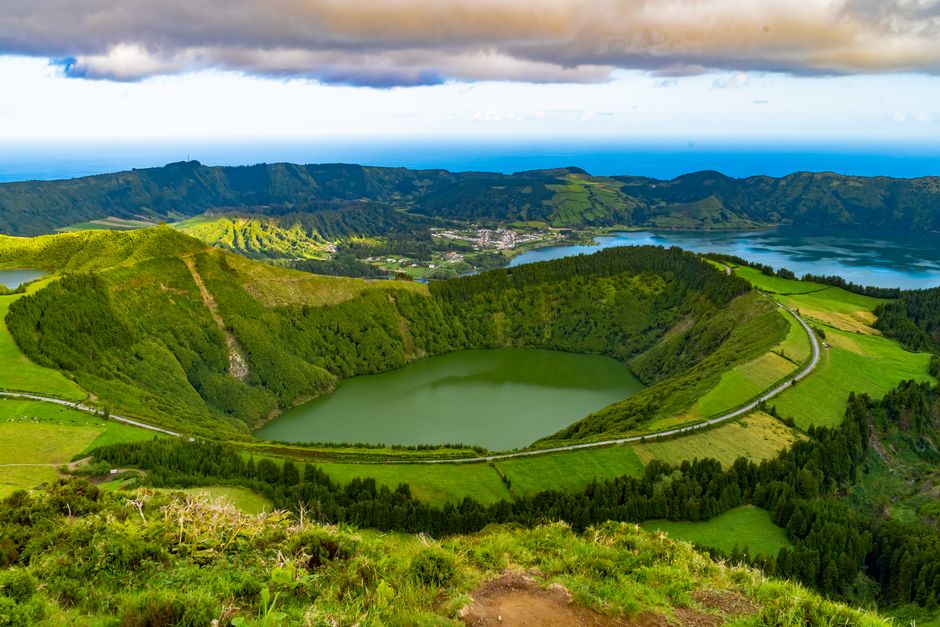
Can São Miguel’s famous lakes and hot springs fit into one realistic trip without spending every day in a car? Yes, but only with a weather-aware route. A morning can begin above the clouds at a volcanic viewpoint and end in warm mineral water at sea level. The problem is that São Miguel’s weather changes quickly, roads cross steep high ground, and the most attractive sites sit in different parts of the island.
The best plan combines one western lake district, one central volcanic lake, and a full day in Furnas. Keep flexible time for cloud, rain, and mist. The views are not a guaranteed checklist. The thermal pools, forest paths, fumaroles, and small villages still make a strong day when the famous panorama disappears.
How to plan a São Miguel lake-and-thermal circuit
Use three geographic clusters
São Miguel is easier to understand as three travel zones. Sete Cidades covers the west, including Lagoa Azul, Lagoa Verde, Lagoa do Canário, and the viewpoints around the volcanic caldera. Lagoa do Fogo sits in the island’s centre, high above the south coast. Furnas occupies the east, where volcanic activity appears through steaming ground, mineral pools, and cooking traditions.
Do not schedule all three zones on one day. The roads are manageable, but viewpoints, short walks, meals, and changing visibility add time.
Build around weather, not a fixed order
Check the mountain forecast on the morning of each excursion. If high ground is clear, prioritise Lagoa do Fogo or the Sete Cidades viewpoints. If cloud covers the ridges, choose Furnas, where the main experiences sit lower and remain atmospheric in light rain.
| Area | Suggested time | Main experience |
|---|---|---|
| Sete Cidades | Half to full day | Caldera lakes and ridge viewpoints |
| Lagoa do Fogo | Half day | High volcanic lake and mountain scenery |
| Furnas | Full day | Thermal pools, fumaroles, gardens, and lake |
| Caldeira Velha | Two to three hours | Forest bathing and warm waterfall pools |
The most reliable sequence is Sete Cidades, Lagoa do Fogo, then Furnas. Reverse it when the forecast gives the eastern side a clearer morning.
Which São Miguel lakes deserve priority?
The short answer is Lagoa do Fogo for wild scenery, Sete Cidades for variety, and Lagoa das Furnas for the strongest link between landscape and local life. These are not interchangeable stops. Each shows a different side of the island’s volcanic history.
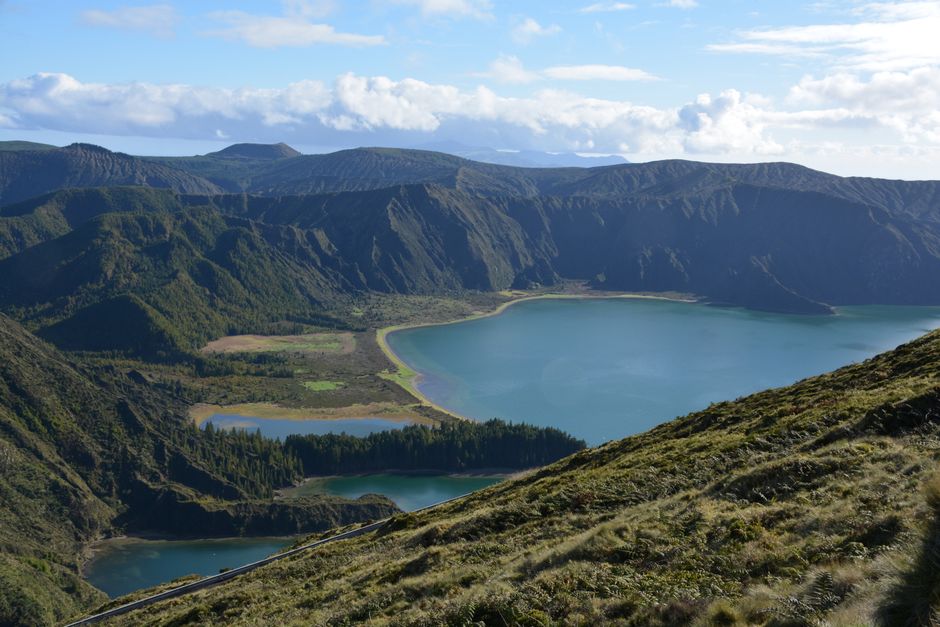
Sete Cidades works best for a first visit because several viewpoints and lakes can be combined without a long hike. Lagoa do Fogo feels more exposed and less settled, with steep slopes dropping toward a large blue-green crater lake. Lagoa das Furnas is less about a single perfect viewpoint and more about walking through a living volcanic basin, where steam rises beside roads, gardens, and pasture.
For limited time, choose Sete Cidades and Furnas. Add Lagoa do Fogo only when the summit forecast is clear enough to justify the climb. A hidden lake behind thick cloud is still impressive, but it is not worth sacrificing a full thermal afternoon.
The clearest choice for a first visit
Sete Cidades is the strongest all-round choice. It offers viewpoints, village scenery, several lakes, and shorter stops that work for different fitness levels.
The clearest choice for a dramatic landscape
Lagoa do Fogo wins for scale and isolation. The official Praia–Lagoa do Fogo route covers about 10.2 kilometres and takes roughly four hours, so it requires more time and suitable footwear than a viewpoint stop.
What São Miguel’s lakes reveal about the island
São Miguel’s lakes occupy volcanic calderas, but the experience is not just geological sightseeing. A caldera is a large depression created when a volcanic system empties or collapses. Rain collects inside it, slopes hold the water, and vegetation gradually softens the crater walls. That process explains the island’s deep lakes, layered ridges, and sudden changes between open pasture and dense forest.
Sete Cidades shows how people and water share one volcanic basin. Lagoa Azul and Lagoa Verde are linked by local legend and appear different in colour depending on light, algae, depth, and the surrounding vegetation. The famous viewpoint is useful, but the lake edges and village roads give a more complete sense of scale. The crater is not a single postcard. It is a broad settlement landscape enclosed by high green walls.
Lagoa do Fogo feels less domesticated. It lies inside a protected area, and access to the shore is more demanding than the main viewpoints. The official trail from the south is around 10 to 11 kilometres depending on the route listing and takes about four hours. Mud is common near water channels, so trail shoes matter more than fashionable clothing. Nesting birds also require distance and quiet during the spring nesting season.
Furnas adds geothermal activity to the picture. Around Lagoa das Furnas, steam vents and bubbling ground show that the volcanic system remains active below the surface. The lake walk covers roughly 9.5 kilometres and takes about three hours. It is a better choice than rushing between thermal pools because it connects the lake, fumaroles, woodland, and cultural landscape in one steady loop.
The practical lesson is simple: treat the lakes as living volcanic environments, not swimming spots. Stay on marked paths, keep away from unstable edges, and never assume that clear water is safe for bathing.
A practical three-day itinerary for lakes and hot springs
- Day one: Sete Cidades. Start with the highest viewpoint while visibility is usually at its best. Continue to Lagoa do Canário and the surrounding forest roads, then descend toward the village of Sete Cidades. Allow time for a slow walk beside the lakes instead of stacking too many viewpoints. The Mata do Canário route toward Sete Cidades is about 11.7 kilometres and takes around three hours, but it is a linear walk, so transport planning matters.
- Day two: Lagoa do Fogo and the south coast. Check the summit forecast before leaving. If the lake is visible, visit the main viewpoints first and decide if the four-hour shore route fits the day. If cloud closes in, skip the long walk and move toward the coast, where lower elevations often remain clearer. A flexible day is more enjoyable than forcing a mountain hike in poor visibility.
- Day three: Furnas. Begin at Lagoa das Furnas, then visit the geothermal areas and allow time for a proper thermal session. Choose one main bathing site rather than trying to visit every pool. The combination of warm water, iron-rich colour, forest, and volcanic steam makes Furnas the strongest final day because it remains rewarding after two days of viewpoints and walking.
- For a four-day trip: separate Lagoa do Fogo from the south-coast drive. Use the extra day for a shorter trail, a garden visit, or a second thermal session at a different temperature. That buffer also protects the itinerary from one rainy mountain day.
This route keeps the longest drives and highest viewpoints from dominating every day. It also leaves room to change direction when the island’s cloud moves faster than the forecast.
What can go wrong on a São Miguel lake trip?
Will the famous viewpoints be clear?
Not always. São Miguel has fast-moving cloud, especially on high ridges. A blue sky in Ponta Delgada does not guarantee a clear Lagoa do Fogo or Sete Cidades viewpoint. Check live cameras or current local conditions where available, then keep a low-level alternative ready. Furnas, coastal villages, and forest sites are safer choices when the summits disappear.
Can every lake be reached by car?
No. Some viewpoints sit beside roads, but the most rewarding shore experiences require walking. The trail to Lagoa do Fogo is medium difficulty and can become muddy. The Furnas lake circuit is longer than it first appears. Wear shoes with grip and avoid planning a full trail in sandals.
Is it safe to swim in the lakes?
Do not assume it is. Lakes may have environmental restrictions, unstable edges, poor access, or water conditions unsuitable for bathing. Use designated thermal facilities for swimming and keep natural lakes as viewing and walking destinations unless local authorities clearly permit entry.
What mistake causes the most frustration?
Trying to visit every attraction in one day. A route that includes Sete Cidades, Lagoa do Fogo, Furnas, and several baths becomes a sequence of car parks. Choose one landscape zone and one main thermal experience each day. That produces more time outdoors and fewer rushed decisions.
What to pack and the clearest final recommendation
Pack for four seasons in one day. A light waterproof layer, warm mid-layer, sun protection, water, and shoes with real grip cover most conditions. Add swimwear, a dark towel, dry clothes, and a bag for wet items. A small offline map helps when mountain coverage drops. Keep food and water in the car because cafés and facilities are not evenly spaced around the island.
Start high viewpoints early, but never force a mountain stop when cloud has erased the view. Leave extra time for narrow roads, walkers, farm traffic, and wet surfaces. Follow marked trails and local signs, especially around protected lakes and geothermal ground.
For a balanced first trip, choose Sete Cidades for the western lakes, Lagoa do Fogo only during a clear weather window, and Furnas for the main thermal day. Add Caldeira Velha when a shorter forest bathing experience fits the route. This combination gives the best mix of volcanic scenery, practical walking, local landscape, and warm water without turning São Miguel into a checklist.”