How can one Vancouver day include rainforest, ocean views, local food, public art and an easy waterfront walk without feeling rushed? The strongest answer is a carefully ordered visit to Stanley Park and Granville Island. The two places are close enough to combine, but they offer very different experiences. Stanley Park rewards an early start and steady walking. Granville Island works better later, when the market, studios and waterfront paths are active.
This guide treats the route as a practical travel plan, not a promise of perfect weather or empty paths. Check official notices before leaving, especially during construction periods and seasonal events.
Why pair Stanley Park with Granville Island?
The short ruling is clear: start with Stanley Park, then move to Granville Island.
The contrast that makes the route work
| Stop | Main experience | Best timing | What to expect |
|---|---|---|---|
| Stanley Park | Forest trails, beaches, viewpoints and the seawall | Morning | More shade, cooler air and fewer busy sections |
| Granville Island | Public market, studios, small theatres and False Creek | Late morning or afternoon | More activity, indoor options and flexible stops |
| False Creek waterfront | Open views, boats and short walking sections | Afternoon | Wind exposure and changing crowd levels |
The practical verdict
Choose this pairing when the goal is variety rather than a deep visit to one site. It gives a first-time visitor a strong sample of Vancouver’s natural and urban character. It does not work as well for travelers who want a long, quiet forest hike, a full museum day or several hours at the beach. The route also requires a transfer between two districts, so a realistic plan should protect at least thirty minutes for movement, waiting and orientation.
Stanley Park covers a large area, and a complete waterfront circuit can become a major walking commitment. The official park information lists the park as generally open from early morning until evening, subject to posted notices. Granville Island has its own operating rhythm; the Public Market information lists daily hours while warning that individual businesses may follow different schedules.
How should a first day be sequenced?
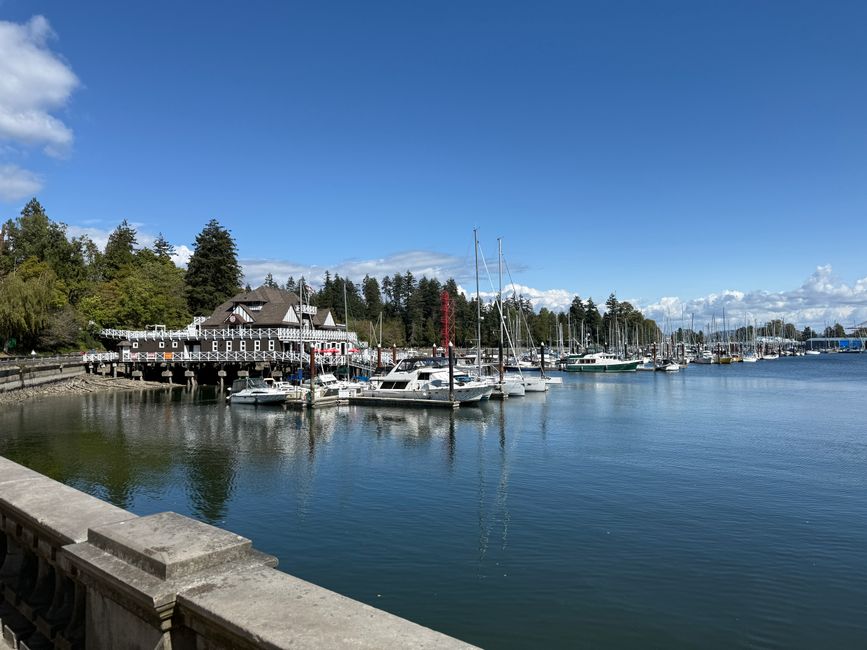
A useful first-day plan is based on energy, light and opening times. The sequence below avoids the common mistake of spending too long at the first stop and reaching the second one after the most useful indoor places have closed.
A workable one-day order
- 8:30 to 9:00: Enter Stanley Park from the downtown side, use the map, and decide whether the priority is the seawall, forest paths, viewpoints or beaches.
- 9:00 to 11:30: Walk a selected section rather than trying to cover every path. Add the totem poles, Brockton Point or a beach only if the route remains comfortable.
- 11:30 to 12:15: Leave time for the transfer to Granville Island. Public transit, walking connections and water-based services can take different amounts of time depending on the day.
- 12:15 to 2:30: Explore the market, choose a meal, and browse the indoor and outdoor areas without treating every stall as a required stop.
- 2:30 to 4:00: Walk beside False Creek, visit the art and performance areas, or pause in a quieter public space.
- After 4:00: Keep the final period flexible. Weather, fatigue and business hours should decide whether to stay on the island or return toward downtown.
Why the early start matters
Morning gives Stanley Park its strongest advantages: softer light, cooler temperatures and a better chance of finding a comfortable pace on narrow paths. The park can feel deceptively easy at the entrance because the main roads are accessible, yet the combination of distance, hills and unplanned viewpoints quickly adds time. Set a turnaround point before walking. A visit that ends with energy left is usually more satisfying than a forced full circuit.
For route changes, check the current regional transit schedules before departure.
What should visitors expect inside Stanley Park?
Stanley Park is not one attraction with a single entrance, queue or viewpoint. It is a large urban park where paved waterfront routes, forest trails, beaches, gardens, monuments and cultural sites sit within the same broad area. That variety is the reason to visit, but it also creates the main planning risk: a short sightseeing stop can quietly become a half-day walk.
The seawall is scenic, not effortless
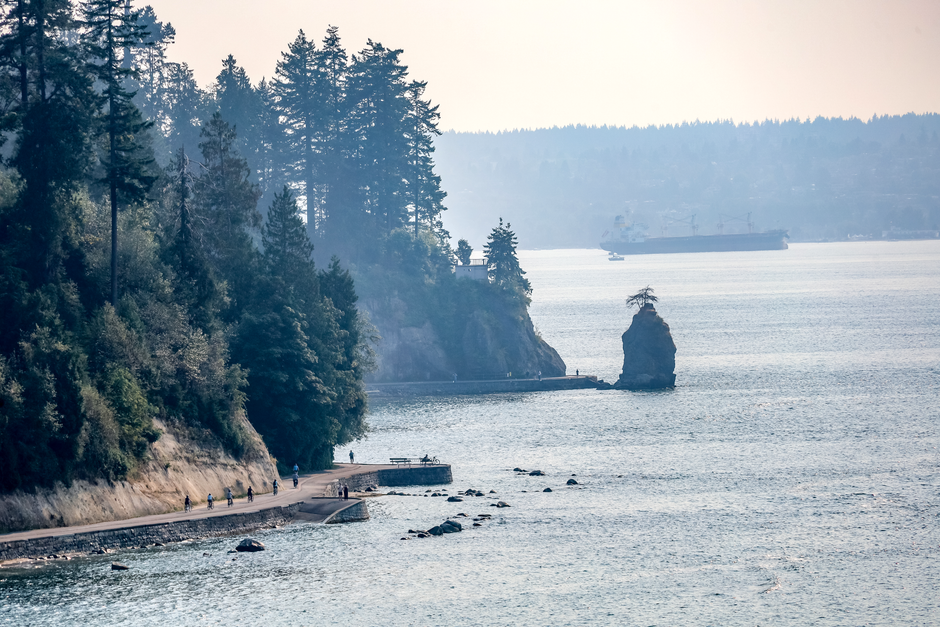
The seawall offers the clearest first impression of Vancouver’s relationship with water and mountains. Expect open viewpoints, wind, cyclists, runners and sections where pedestrians need to stay alert. The path is shared in spirit even where walking and cycling areas are separated. Stop at the side before taking photographs, and do not block a narrow viewpoint while deciding where to go next.
A full loop is a serious walking plan. For most visitors, a selected stretch gives a better balance: walk until the views become repetitive, then turn inland toward a forest path, beach or landmark. Waterproof layers help more than heavy clothing because the waterfront can feel colder than the sheltered downtown streets.
The forest changes the pace
Inside the park, tall trees reduce noise and create a different atmosphere within minutes. Forest trails can be damp, uneven or muddy after rain, so comfortable shoes with secure soles are a sensible choice. The park map identifies accessible routes, washrooms and major features, but conditions can change after storms or maintenance work. Use posted signs rather than relying only on a phone map.
Wildlife sightings are possible but never guaranteed. Keep distance from animals, avoid feeding them and leave natural areas intact. Beaches and viewpoints are useful rest points, especially for families or travelers managing limited mobility. The best verdict for a first visit is to choose three priorities: one waterfront section, one forest or cultural stop, and one place to sit. More than that can turn a scenic morning into a race.
Why does Granville Island work best as a slow stop?
Granville Island should be treated as a flexible neighborhood, not a checklist. Its appeal comes from moving between food stalls, studios, public spaces, performance areas and the False Creek edge. A strict schedule misses the point because the most enjoyable moments often come from choosing a short line, listening to a performer or finding an open seat.
Use the market as an anchor
Begin with the indoor market if food, fresh produce and small specialty counters are central to the visit. Walk through once before choosing a meal. The market is busiest around common meal periods, so an early lunch or late lunch usually creates a calmer experience.
Opening times can change by season, and individual merchants may not match the main market schedule.
Look beyond the market building
The island’s studios, small theatres, craft spaces and waterfront paths provide the needed contrast after an indoor meal. Browse slowly, but do not assume every business is open every day. The strongest use of Granville Island is a ninety-minute to three-hour visit with room for detours, not a timed sprint from one address to another.
For visitors who dislike crowds, the clear recommendation is to arrive near opening or visit later in the afternoon after the busiest lunch period. For visitors seeking atmosphere, midday offers the greatest activity but also the least personal space.
Which itinerary fits the available time?
The best plan depends less on the number of attractions and more on the amount of walking the day can support. A short visit should favor one strong experience at each destination. A longer visit can add beaches, forest trails, studios or a sunset pause without forcing every stop into the same afternoon.
Three practical versions
| Available time | Recommended plan | Best for | Main trade-off |
|---|---|---|---|
| 4 to 5 hours | Selected Stanley Park seawall section, transfer, brief Granville Island market visit | First-time visitors with limited time | Few inland trails and little browsing |
| 7 to 8 hours | Morning park walk, cultural landmark or beach, relaxed market meal, False Creek stroll | Most travelers | Requires an early start and sensible route choices |
| Two days | Stanley Park on day one; Granville Island with nearby waterfront areas on day two | Travelers who prefer a slower pace | Less efficient if the rest of Vancouver must fit into one day |
The final recommendation
For a single day, the seven-to-eight-hour version is the strongest choice because it preserves the contrast between forest and market without turning either destination into a rushed photo stop. Start at Stanley Park, choose a defined walking section, transfer before fatigue sets in, and let Granville Island absorb the flexible part of the afternoon. The result is a balanced Vancouver itinerary with room for weather, crowds and the occasional unplanned view.