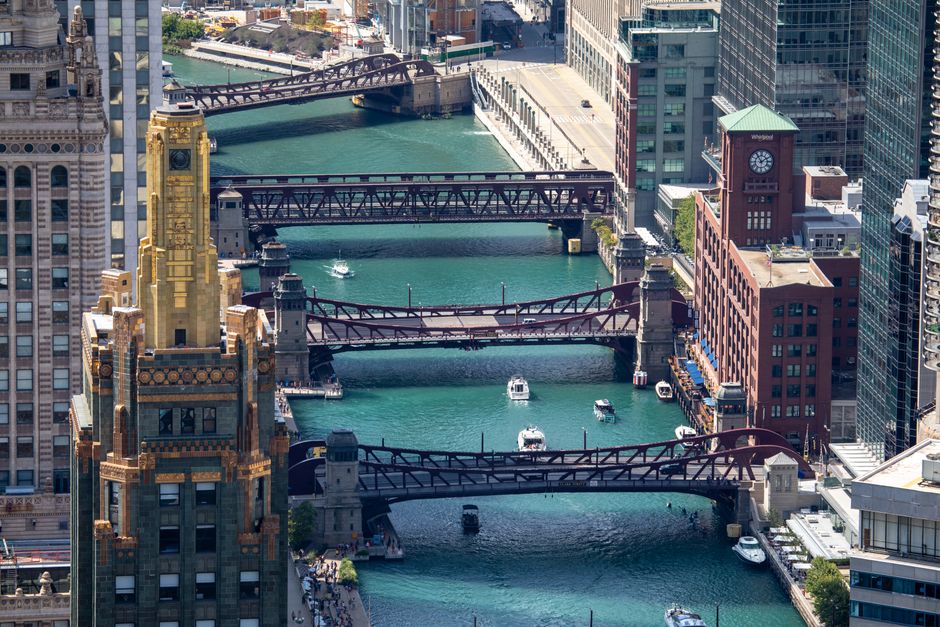
Chicago rewards travellers who connect its architecture, water and neighbourhoods instead of treating them as separate attractions. The most efficient visit combines the central skyline with the Lake Michigan shore, then leaves time for one or two areas beyond the core.
What should a first Chicago itinerary prioritise?
The strongest first-day plan starts in the Loop, follows the Chicago River, and ends beside Lake Michigan. This route gives a clear sense of the city’s scale before adding the quieter details that make Chicago more than a skyline.
Start with the Loop and the river
The Loop contains the densest concentration of recognisable civic buildings, early skyscrapers, elevated railway tracks and public spaces. Begin near the river and walk east or south through the central streets. The Chicago River creates useful viewpoints because bridges frame the buildings at water level, while the elevated railway reveals a second layer of the city above the streets.
An architecture-focused river cruise is the easiest way to understand the city quickly, especially for a first visit. The changing angle from the water makes setbacks, materials and structural forms easier to read than they are from a pavement crowded with traffic. A walking route remains valuable afterwards because it exposes entrances, stonework, arcades and small public spaces that a boat cannot reach.
Use Millennium Park as a transition point
Millennium Park connects the business district to the lakefront and works well as a pause between architectural sightseeing and open-water views. Move through the park towards the Art Institute area, then continue east to the shoreline. This sequence avoids an awkward day of crossing the city repeatedly.
Finish beside Lake Michigan
The lakefront changes the emotional scale of the visit. The skyline becomes a background rather than a wall, and the walking paths create long views south and north. For a first visit, the best verdict is simple: place the Loop, river and lakefront on the same day, then reserve later days for neighbourhoods.
Which Lake Michigan route gives the best city views?
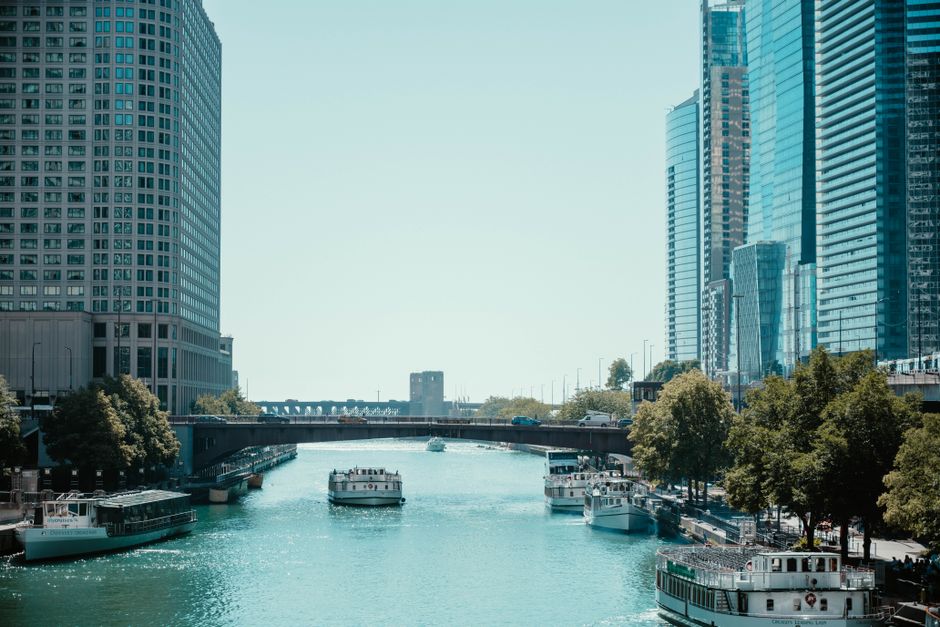
For a first visit, the lakefront route between the Museum Campus and Navy Pier offers the most balanced introduction. It combines skyline views, open water, parks and several points where the city’s geography becomes obvious.
Choose a direction before leaving the centre
Walking north from the central lakefront leads towards Navy Pier and a busier mix of public spaces, entertainment and harbour views. Walking south towards the Museum Campus gives a broader skyline panorama and a stronger sense of the city’s relationship with the lake. Both directions work, but trying to cover the entire shoreline in one outing usually creates fatigue without adding much understanding.
Plan around wind, shade and surface conditions
The lakefront can feel much cooler than the streets among tall buildings. Wind arrives with little warning, particularly on exposed paths and bridges. Summer sun also becomes tiring because long stretches offer limited shade. Comfortable walking shoes, a light extra layer and water matter more than a tightly packed sightseeing list.
Spring and autumn often provide the clearest balance of comfortable temperatures and open views, but conditions can shift quickly. Summer offers longer daylight and lively public spaces, while winter brings fewer visitors and stark views across the water. The best practical choice is to schedule the shoreline during the brightest and calmest part of the day, then move indoors when the wind rises.
Use the shoreline as a reset
The lakefront is not just another attraction to tick off. It gives the eyes a break from vertical streets and helps explain why Chicago developed such a strong public edge beside the water. A good itinerary places this route between dense urban activities, rather than adding it after an already exhausting day.
Which Chicago neighbourhoods are worth adding to a short trip?
Chicago’s neighbourhoods offer different answers to the same travel question: should the visit focus on food, local streets, history, nightlife or a slower daily rhythm?
| Neighbourhood | Best for | What to expect | Time needed |
|---|---|---|---|
| River North | Central dining and galleries | Busy streets, converted warehouses and easy access to the river | Half a day |
| West Loop | Restaurants and former industrial streets | Warehouse architecture, active evenings and a fast-changing urban scene | Half a day to one evening |
| Hyde Park | Culture, parks and residential streets | More spacious blocks, museums and a slower pace south of the centre | One day |
| Pilsen | Murals and Mexican-American heritage | Colourful public art, local businesses and strong community identity | Half a day |
The clear pick for a first neighbourhood beyond the centre is Pilsen for public art and street-level character, while Hyde Park suits travellers who want museums and a less compressed urban setting. West Loop is the most convenient evening choice after central sightseeing, but its dining scene can feel concentrated and busy. Wicker Park works better for browsing than for landmark sightseeing.
Match the area to the available time
One short trip should not attempt every neighbourhood. Choose one area that adds something missing from the Loop: residential scale, local history, murals or evening activity. Crossing the city for a brief stop in several places produces a map full of pins but little sense of how each community feels.
Respect the difference between a visitor district and a living area
Neighbourhoods are not open-air theme parks. Public art, family businesses and residential streets deserve the same care given to famous landmarks. The best neighbourhood visit leaves with a stronger understanding of the area, not just a collection of images.
How should a three-day Chicago itinerary be arranged?
A three-day visit needs clear priorities. The most reliable structure is one central day, one lakefront and museum day, and one neighbourhood day. That order limits backtracking and leaves room for weather changes.
- Day one: central architecture. Start near the Chicago River, follow a walking route through the Loop, and use the afternoon for Millennium Park and nearby cultural institutions. End at the lakefront while daylight remains. This day explains the city’s history, skyline and geography in one continuous movement.
- Day two: lakefront and museums. Choose either the Museum Campus area or the northern lakefront, rather than trying to complete every shoreline segment. Add one major indoor visit and keep the rest of the day flexible. A long lakefront walk becomes less enjoyable when it follows several hours of standing in crowded galleries.
- Use local streets as the main attraction, then add one cultural or food stop. Finish in the centre only if transport makes the return easy.
- Keep one weather reserve. Move the lakefront day if strong wind, heavy rain or severe cold makes the paths unpleasant. Indoor architecture, museums and neighbourhood cafés can carry a poor-weather day, while the lake cannot be forced into good conditions.
Public transport is usually the practical backbone of this plan, but walking sections should be grouped by geography. A common failure mode is crossing downtown several times because each attraction was booked independently. Another is placing the lakefront at the very end of the trip, when tired legs turn a strong experience into a rushed obligation.
The best three-day verdict is one major theme per day, with a reserve block for weather and energy. That structure feels less hurried and still covers the city’s defining contrasts.
What mistakes should visitors avoid in Chicago?
Is downtown enough for a complete visit?
No. The Loop and river provide the essential architectural introduction, but a trip limited to downtown misses the city’s residential scale, community history and varied street life. Add at least one neighbourhood beyond the centre, even if the visit lasts only a few hours.
Should every famous attraction be included?
No. Chicago rewards selection. A packed list often creates long crossings and short visits, leaving little time to understand any place. Pick one major museum, one architectural route, one lakefront section and one neighbourhood. The result is more coherent than chasing every popular landmark.
Is walking always the best way to see the city?
Walking is strongest when destinations sit close together. It becomes inefficient across long distances or in poor weather. Use public transport for the large jumps, then walk within each area. Taxis and rides can help late at night or when mobility needs make long transfers difficult, but a route designed around short walking clusters usually gives the clearest experience.
What should be checked before leaving each morning?
Check the wind, temperature, rain forecast, museum opening times and any event that may affect central streets. Lake Michigan can make a mild forecast feel colder at the water, while major festivals can change travel times. The most avoidable mistake is treating the weather in the centre as a perfect guide to conditions on the shore.
These choices lead to a firm recommendation: avoid a checklist built around distance and build each day around one connected area. That approach protects time, energy and attention.