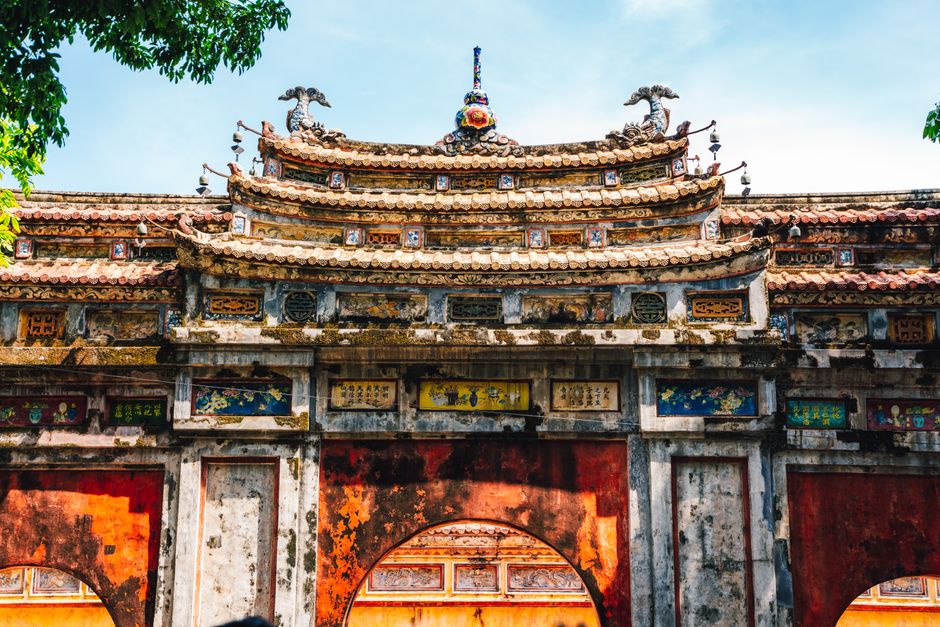
Arriving in Hue at midday, walking straight into the Imperial City, and trying to add three royal tombs before sunset sounds efficient. In practice, the heat, large courtyards, river crossings, and scattered monuments turn that plan into a rushed day. The better approach is simple: give the Imperial City one focused morning, group the royal tombs by location, and leave room for weather changes.
How to plan a first visit to Hue
Hue rewards travelers who understand its layout before arriving. The Imperial City occupies the northern side of the Perfume River. Several royal tombs spread across the hills and countryside to the southwest. Pagodas, gardens, markets, and modern streets fill the space between them.
Why the Imperial City and tombs need separate time
The Imperial City is a large walled complex rather than a single palace. The Noon Gate, royal courtyards, ceremonial halls, temple buildings, gardens, and damaged sections all require walking. Allow at least three hours for a meaningful visit, especially if the weather is hot. The royal tombs work differently. Each has its own entrance sequence, landscape, and mood, so visiting two well is more rewarding than racing through four.
Start with the Imperial City because it provides the historical framework. The tombs then show how individual emperors shaped their final landscapes through lakes, terraces, courtyards, and pavilions.
When the weather changes the plan
February through April usually offers the most comfortable sightseeing conditions, with milder temperatures and less persistent rain. May through August can be hot, so outdoor visits work best early in the day and late in the afternoon. September through December brings a higher risk of heavy rain and flooding in central Vietnam. Forecasts matter more than a fixed schedule during this period.
A light rain shell, covered shoulders, and comfortable shoes matter more than a tightly packed itinerary.
What to do in Hue in two days
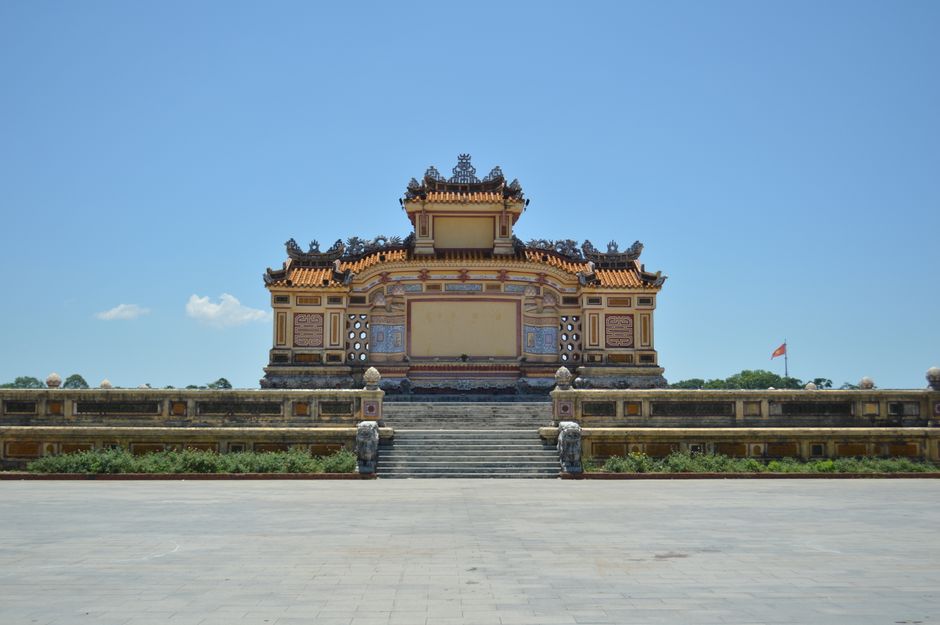
A two-day visit is the right minimum for the main sights. The schedule below separates the busiest walking from the longer journeys and leaves enough time to stop for lunch, shade, and an unplanned view along the Perfume River.
Two-day itinerary at a glance
| Day | Time | Plan | Reason |
|---|---|---|---|
| Day 1 | Morning | Imperial City, Noon Gate, royal courtyards, temples | Cooler temperatures make the long walking easier |
| Day 1 | Afternoon | Lunch, rest, Royal Antiquities Museum or local market | Protects energy during the hottest hours |
| Day 1 | Late afternoon | Perfume River walk and riverside viewpoints | A relaxed end after the main monument visit |
| Day 2 | Morning | Minh Mang Tomb or Tu Duc Tomb | Gardens and water features are calmer early |
| Day 2 | Afternoon | Khai Dinh Tomb, then return through the southern outskirts | Combines a compact hillside site with a contrasting route |
| Day 2 | Evening | Local meal and a quiet walk near the river | Leaves space for weather delays and slower travel |
How to choose the tombs
Choose Minh Mang Tomb for balance: formal lines, green grounds, water, and a strong connection between architecture and landscape. Choose Tu Duc Tomb for a quieter, more reflective setting with wooded paths and ponds. Choose Khai Dinh Tomb for ornate decoration and a steep, compact sequence of steps. It is visually different from the other two and takes less time on the ground, but the climb can be tiring.
For most first-time visitors, Minh Mang and Khai Dinh make the strongest pairing because they show two contrasting styles. Replace Khai Dinh with Tu Duc when gardens and atmosphere matter more than decoration.
How to move around Hue without wasting the day
The main mistake is treating Hue as a walking-only destination. The Imperial City is easy to explore on foot, but the tombs are spread across the outskirts. A good route reduces backtracking and prevents transport delays from consuming the afternoon.
A practical order of operations
- Begin at the Imperial City. Arrive early enough to walk through the main ceremonial areas before the strongest heat.
- Pause before changing districts. Take lunch and water near the central city rather than trying to eat between distant tombs.
- Allow extra time for each transfer. Traffic, rain, roadworks, and slow stops can change the route, especially outside the center.
- Finish near the river. The Perfume River area is a calmer place to end the day than another major monument.
What to carry and wear
Wear shoes with firm soles because the sites combine stone courtyards, uneven paths, steps, and damp surfaces after rain. Carry drinking water, sun protection, a small umbrella or rain layer, and a cloth that can cover shoulders or knees when entering religious spaces. A phone with offline maps helps when the signal becomes unreliable outside the central streets.
Do not depend on a single departure time for the return journey. Heavy rain can slow traffic, and the last section of a tomb visit often takes longer than expected because the grounds invite pauses. A flexible final hour is a practical safety margin, not wasted time.
What should visitors know before entering the monuments?
Hue becomes easier once the basic questions are settled before the first gate. The most useful answers concern time, clothing, site selection, and rain.
Is one day enough for the Imperial City?
One day can cover the Imperial City and one nearby cultural stop, but it is not enough for a relaxed visit to the Imperial City plus several royal tombs. A single day works for travelers passing through central Vietnam who can start early and accept a short overview. Two full days give the monuments room to breathe. A third day becomes valuable for a quieter pace, a pagoda, a countryside route, or a weather backup.
Which royal tomb is best for a first visit?
Minh Mang is the strongest all-round choice because its layout connects buildings, gardens, hills, and water in a clear sequence. Tu Duc is the better choice for visitors who prefer shade and a less formal atmosphere. Khai Dinh suits travelers who want intricate interiors and a compact visit, but the stair-heavy approach is less comfortable in intense heat.
What happens if it rains?
Light rain rarely ruins the Imperial City, but heavy rain can make the open courtyards and distant tombs unpleasant. Move the schedule indoors when possible, confirm that roads remain passable, and avoid assuming that a clear morning guarantees a dry afternoon. During the wetter months, keep the most important outdoor site on the day with the best forecast rather than assigning it automatically to day one.
The best Hue itinerary leaves space for the city itself
The strongest Hue plan is not the one with the most monuments; it is the one that protects enough time to understand them. The Imperial City explains the power and structure of the Nguyen capital. The tombs reveal personal taste, ritual, landscape design, and the changing character of each reign. Rushing between them hides the connection that makes Hue distinctive.
Mistakes that make Hue feel harder than it is
- Trying to visit every major tomb in one afternoon.
- Arriving at the Imperial City during the hottest part of the day.
- Ignoring modest clothing requirements at temples and pagodas.
- Booking a rigid schedule during the rainy season.
- Choosing transport only by the shortest map route instead of grouping nearby sights.
Another common mistake is judging Hue only by its most restored buildings. Some sections show war damage, age, or ongoing conservation. That contrast is part of the site’s story. The quieter walls, gardens, and partial ruins often make the visit more memorable than a perfectly preserved facade.
When to add a third day
Add a third day when the trip includes a slow cultural pace, uncertain weather, or an interest in places beyond the central monuments. Use it for a second tomb, a pagoda, a countryside ride, or a return to the riverfront at a different time of day. Do not add another day simply to collect more entrances. The most valuable extra time in Hue is time spent moving slowly through the spaces already chosen.
For a smoother visit, spend one morning on the Imperial City, one day on carefully selected tombs, and let the weather guide the gaps between them.