The first morning in Valencia often starts with a familiar mistake: walking through the Old Town in the heat, stopping for lunch at the busiest hour, then trying to squeeze the Turia Gardens and the beach into one exhausted afternoon. Valencia is easy to visit, but the order matters. The historic centre, the old riverbed and the coast each work best at a different time of day.
How to plan Valencia around three different city moods
Best approach: divide Valencia into three zones instead of treating it as one large sightseeing list. The Old Town rewards close attention. The Turia Gardens reward movement. The beaches reward patience, especially when the sun is strongest and the waterfront feels too hot for a long walk.
Start with the Old Town before the streets fill
Ciutat Vella is the right place for the first serious walk. Begin near Plaça de la Reina, then move towards Valencia Cathedral, the narrow streets around El Carmen and the Torres de Serranos. The distances are short, but the route changes character every few minutes. A grand square gives way to a quiet lane, then opens into a market street or a small historic courtyard.
Morning also solves a practical problem. The Central Market is liveliest before lunchtime, while the streets around it become slower and busier later. The Lonja de la Seda sits directly opposite, so these two sights belong in the same block of the itinerary. Allow at least three hours for this area if the aim is to look inside buildings rather than photograph their exteriors.
Use the riverbed as a transition, not an isolated attraction
The Turia Gardens run through the city in a long green corridor created in the former riverbed. The gardens connect the historic centre with newer neighbourhoods and the coast-facing side of Valencia. That makes them more useful as a walking route than as a single stop.
The route includes bridges, sports areas, palms, open lawns and shaded sections. It also gives a break from traffic without forcing a long detour. A traveller who treats the gardens as transport with scenery will see more of Valencia and spend less time crossing busy roads.
Save the coast for a slower afternoon
The beach area needs a different expectation. Valencia’s coast is broad, open and built for lingering, not for collecting landmarks every ten minutes. The Marina, Las Arenas, Malvarrosa and Patacona each have a different feel, so choosing one stretch is better than marching along the entire waterfront.
Late afternoon is the strongest choice for most visitors. The light improves, the heat softens and the beach becomes more comfortable for a walk. The clear verdict is to keep the three zones in sequence: Old Town for detail, Turia Gardens for movement and the coast for space. Trying to reverse that order usually creates unnecessary travel and a rushed evening.
What to see in Valencia Old Town on a first morning
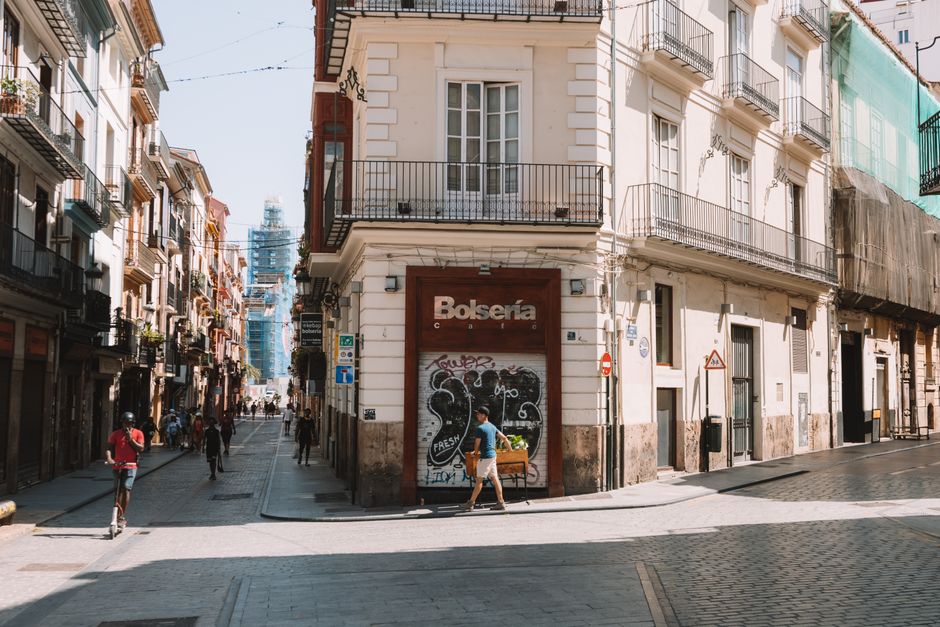
A first Old Town route should feel deliberate, not crowded. The centre is compact enough to cover on foot, but only if the route avoids repeated crossings. The list below follows a practical east-to-west pattern and leaves room for pauses.
The route in eight useful stops
- Plaça de la Reina: Use the square as a starting point and look towards the cathedral before entering the smaller streets.
- Valencia Cathedral: Allow time for the interior and the surrounding lanes. The building combines several periods, so the details are more interesting than a quick exterior photograph.
- Plaza de la Virgen: Continue towards this calmer historic square. It is a good place to understand the relationship between the cathedral, civic buildings and older religious sites.
- El Carmen: Walk west through the narrow streets. This is the section for street art, worn façades and sudden changes in scale.
- Torres de Serranos: Reach the medieval gates before leaving the old centre. They mark a natural transition towards the Turia Gardens.
- Central Market: Visit earlier rather than later if the market is part of the plan. Crowds build quickly around the main entrances.
- Lonja de la Seda: Cross the street for one of Valencia’s clearest examples of commercial power turned into architecture.
- Plaça de l’Ajuntament: Finish south of the main historic cluster if a wider view of modern Valencia is useful.
How long each section really needs
The central cathedral and square area can take 60 to 90 minutes. El Carmen needs another hour if the route includes side streets and street art. The market and Lonja work well as a paired visit of roughly 60 to 90 minutes, depending on crowd levels and opening times.
Do not force every interior into the morning. Valencia’s Old Town is not a checklist of doors to enter. The better result comes from choosing two or three interiors and leaving enough time to notice the streets between them. The practical verdict: the first morning should end near the Torres de Serranos or the Turia Gardens, not at the far edge of the city.
Which Valencia beach fits the afternoon?
Valencia has more than one coastal experience. The nearest beach is not always the best choice, and the liveliest section is not automatically the most relaxing. Walking times are approximate and change with the starting point, heat and traffic.
Beach comparison at a glance
| Coastal area | Best for | Approximate time from Old Town | What to expect |
|---|---|---|---|
| Las Arenas | First beach visit and waterfront atmosphere | 30–40 minutes by public transport | Wide sand, busy promenade, easy access to the Marina |
| Malvarrosa | Classic city beach and swimming | 35–45 minutes by public transport | Broad open sand, long shoreline, more space than Las Arenas |
| Patacona | A quieter beach walk | 45–60 minutes by public transport | Less central feel, long shoreline, relaxed residential edge |
| Valencia Marina | Architecture, boats and sunset atmosphere | 30–40 minutes by public transport | Promenades and harbour views; not the main choice for sand |
Choose the coast by purpose, not by reputation
Las Arenas is the easiest introduction because it combines sand, the Marina and a busy waterfront. It suits a first visit that needs a little energy. Malvarrosa is the better choice for a straightforward beach afternoon with a broad shoreline and fewer reasons to keep moving. Patacona wins for visitors who want a slower walk and a less central setting.
The coast also changes sharply with the weather. Wind can make a beach feel cooler than expected, while strong sun makes the open sand uncomfortable at midday. The practical rule is to arrive later, walk the promenade first and settle on the beach only after checking the conditions. A beach day does not need to become a full-day commitment.
When not to choose the beach
Skip the coast if the main goal is architecture, museums or a compact historic walk. The trip out and back can consume enough time to weaken an already short visit. On a one-day itinerary, the Old Town and Turia Gardens provide a stronger sense of Valencia than a rushed hour on the sand.
For two or more days, add the beach without hesitation. For one day, choose it only if open space and swimming matter more than another landmark. That is the honest tradeoff. Valencia’s coast is enjoyable, but it should not be treated as a mandatory tick when the schedule is already full.
What commonly goes wrong on a Valencia itinerary?
Valencia is forgiving, but several planning mistakes make the city feel hotter, larger and more crowded than it needs to be. The fixes are simple.
Should the Old Town, gardens and beach fit into one day?
Yes, but only with clear priorities. Start in the Old Town, move through a manageable section of the Turia Gardens and finish at one coastal area. Do not attempt every historic interior, the entire riverbed and every beach in the same day. The strongest one-day version includes the cathedral area, the market and Lonja, the Serranos side of the gardens, then Las Arenas or Malvarrosa.
What is the biggest timing mistake?
Starting the beach at noon and saving the Old Town for late afternoon. The exposed coast offers little relief from the strongest heat, while many historic sights become less convenient as opening times and meal hours move on. Morning belongs to the centre. Late afternoon belongs to the coast.
How can visitors avoid a disappointing local experience?
- Do not judge the whole city from the busiest square. Turn into the smaller streets around El Carmen and the old market area.
- Do not plan a long outdoor walk without a shaded pause. The Turia Gardens contain shade, but not every section offers it continuously.
- Do not assume every beach has the same atmosphere. Las Arenas is more active, Malvarrosa is more open and Patacona feels more removed.
- Do not rely on a packed schedule during the hottest months. Keep one flexible block for weather, fatigue or an unexpectedly slow lunch.
- Do not leave food and transport decisions until the final hour. Popular areas become busy at predictable times, and a small amount of planning prevents a long search.
The opening scenario has an easy fix. Instead of fighting across Valencia in the heat, give each zone its proper moment: Old Town early, Turia Gardens as the connecting route, and the beach when the afternoon softens. The city then feels spacious rather than rushed, and the itinerary leaves room for the detail that makes Valencia memorable.