Sicily is the largest island in the Mediterranean, yet its best-known northern and eastern stops can appear deceptively close on a map. Palermo, Cefalù and Taormina offer three different versions of the island: crowded street life, a compact seaside town and a dramatic hilltop setting. The route works best when travel time becomes part of the plan rather than an afterthought.
How many days do Palermo, Cefalù and Taormina need?
The strongest itinerary gives Palermo enough time for its markets, churches and layered history, treats Cefalù as either a slow stop or a carefully chosen day trip, and reserves several nights for Taormina and the nearby coast. A rushed route can cover all three places, but it leaves little room for heat, delayed trains, steep streets or a long lunch.
The most balanced route length
For eight days, use three nights in Palermo, two nights in Cefalù and three nights in Taormina. This creates seven useful sightseeing days after arrival and avoids changing bases every morning. A six-day version can remove one Cefalù night, while a ten-day trip should add time around western Sicily or Mount Etna rather than simply stretching the same town visits.
A practical eight-day outline
| Day | Base | Main plan |
|---|---|---|
| 1 | Palermo | Arrival, historic centre, evening walk |
| 2 | Palermo | Markets, cathedral area and Norman monuments |
| 3 | Palermo | Monreale or a slower city day |
| 4 | Cefalù | Transfer, old town and waterfront |
| 5 | Cefalù | Rocca walk, beach or village time |
| 6 | Taormina | Long transfer via Messina, evening orientation |
| 7 | Taormina | Greek Theatre, gardens and town lanes |
| 8 | Taormina | Coast, Castelmola or departure |
What should travelers see first in Palermo?
Palermo deserves the first full day because it explains Sicily better than a checklist of isolated monuments. The city shows Arab, Norman, Spanish and modern Italian influences within a short walk, but the experience changes from one street to the next. A polished cathedral can stand close to a noisy market, while a quiet courtyard may sit behind a busy traffic junction.
Use the historic centre as a connected route
Begin near the cathedral and move toward the Norman Palace and Palatine Chapel while energy is high. The interior of the chapel rewards slow observation: gold mosaics, dark stone, carved details and a scale that is easy to miss when visitors move quickly. Continue toward the central crossroads formed by Quattro Canti, then walk toward the Martorana and the nearby church of San Cataldo. The route is compact, but the order matters because the midday sun makes open squares tiring and many interiors have separate entry arrangements.
After the monuments, choose one market rather than trying to see every market in a single morning. Ballarò feels more sprawling and local, while Capo works well beside the cathedral route. Treat food stalls as working neighbourhoods, not themed attractions. Keep bags closed, stand clear of deliveries and ask before photographing people or displays.
Plan Palermo around heat, noise and closing hours
Palermo is most comfortable when sightseeing starts early, pauses during the hottest part of the afternoon and resumes after the light softens. Carry water, wear shoes suited to broken paving and expect traffic to make short crossings slower than they look. A quiet afternoon in the botanical garden or beside the waterfront can be more rewarding than adding another interior to an already full schedule. The clear verdict is simple: give Palermo a full day and a half at minimum, because a single overnight reduces the city to hurried photographs.
Is Cefalù worth visiting for one day?
The short verdict
Yes, Cefalù is the best one-day stop on this route because its main sights sit close together and the town offers a clear change of pace after Palermo. The cathedral square, old lanes, harbour, beach and Rocca trail can fit into one long day, although a second night is the better choice for travelers who want an unhurried swim, a sunset walk or a quiet morning before the crowds arrive.
What a day in Cefalù actually requires
Arrive before late morning, walk through the old town to the cathedral and continue to the medieval washhouse near the water. The Rocca climb takes roughly one to two hours depending on stops and heat; sturdy shoes matter because the surface becomes uneven and exposed. From the upper paths, the view explains the town’s appeal more clearly than the waterfront does: a compact settlement pressed between rock and sea. Finish with the harbour and beach, but do not expect the sand to feel empty during the busiest summer hours.
When Cefalù is the wrong overnight choice
Skip the overnight stay when the trip has fewer than six days, arrival times are late or the route already includes another beach-focused destination. A day visit still gives access to the historic centre, but the return journey can feel tiring after the Rocca. For slower travel, Cefalù wins; for a tight schedule, it is the easiest place to compress without losing the route’s character.
How should travelers move between the three Sicilian bases?
The transport rule is straightforward: use rail for the Palermo-to-Cefalù leg, then treat the Cefalù-to-Taormina transfer as a major travel day. The eastern destination sits below Taormina, so reaching the hilltop town involves a final bus, taxi or uphill walk after arriving at the coastal station.
A low-stress transfer sequence
- Reserve the morning for departure. Pack the night before and leave enough time to reach the station without crossing the city at peak traffic.
- Check the actual train day. Services can vary by weekday, engineering work and seasonal changes, so confirm times shortly before travel.
- Keep luggage manageable. Taormina has steep lanes and steps, while Cefalù has old paving that is awkward with large cases.
- Expect a connection near Messina. The Cefalù-to-Taormina journey commonly takes several hours, even though the map distance seems modest.
- Use the station as a pause point. Water, food and a short break help before the final climb to Taormina.
- Do not schedule a major ticketed sight after arrival. Delays, platform changes and the climb can consume the afternoon.
When a car helps and when it adds trouble
A car is useful for scattered villages, remote beaches and inland detours, but it is a poor tool for the centres of Palermo and Taormina. Traffic, restricted historic streets and limited parking create more work than freedom. For this three-stop route, public transport is the better default; hire a car only when the itinerary includes places that trains cannot reach easily.
Why Taormina is impressive, and when should it be skipped?
The best approach is to treat Taormina as a viewpoint and cultural base, not as a quiet beach town.
Build the town around the first quiet hours
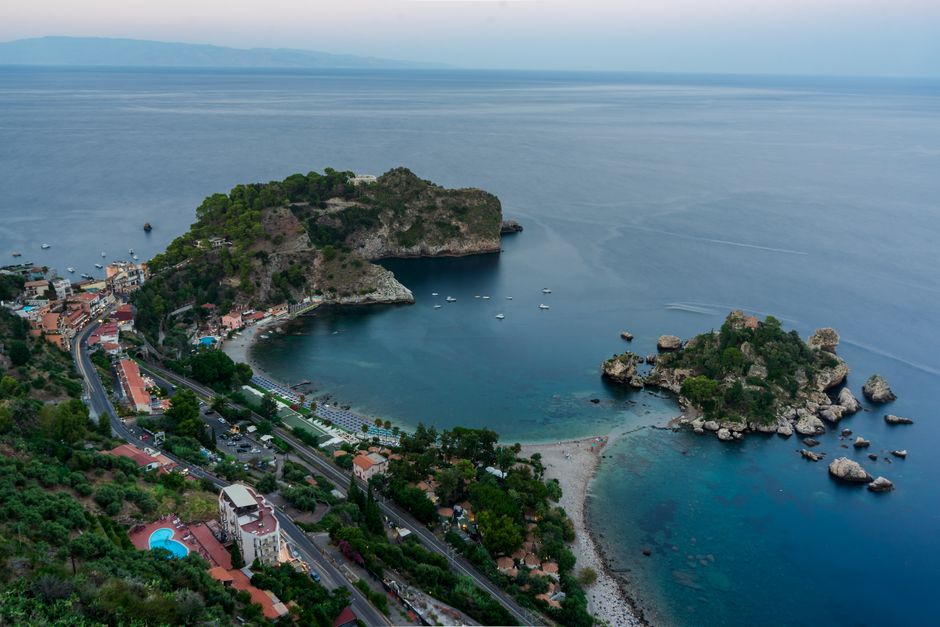
Visit the Greek Theatre early, then walk along Corso Umberto before the main flow of day visitors fills the narrow street. Leave time for the public gardens, which provide shade and a wider view when the central lanes become tiring. Castelmola adds a second hilltop perspective and works well on a separate morning, but the combination of Taormina, Castelmola and a coastal swim can become too much in hot weather.
Know the tradeoff before choosing the base
Taormina is the right final stop for travelers who want scenery, historic architecture and easy access to the coast. It is less suitable for anyone who needs flat streets, late-night transport or a calm resort atmosphere. The sea is below the town, not beside most accommodation, and the route back from the coast includes a climb or a scheduled transfer. Choose Taormina for drama and views; choose Cefalù for a simpler seaside rhythm.
The strongest plan keeps one unassigned half-day. It can absorb bad weather, a delayed connection or the discovery that a smaller village deserves more time than expected.
What mistakes should be avoided on a Palermo-to-Taormina itinerary?
Most problems come from treating Sicily as a small city break rather than a large island with slow roads, strong heat and uneven terrain.
Should every famous sight be booked into the same day?
No. Palermo’s religious buildings, Cefalù’s Rocca and Taormina’s theatre each demand attention, walking and recovery time. Three major sights in one day often produce a record of entrances rather than an understanding of place. Choose one anchor sight per morning, then leave space for markets, food, weather and accidental discoveries.
Is a day trip to Taormina from Palermo sensible?
Usually not. The distance, connections and hilltop arrival make the day long before sightseeing begins. Taormina works better as an overnight base, especially when the itinerary includes the Greek Theatre or nearby coastal areas. A day trip is reasonable only when the purpose is a brief overview and the return journey is not followed by an early departure.
What local habits make the route smoother?
Keep voices low in residential lanes, avoid blocking narrow stairways and learn a few basic Italian greetings. These small choices reduce friction and make the visit feel less like a race through landmarks.
The opening map problem now has a practical answer: Sicily is large enough to punish careless timing, but Palermo, Cefalù and Taormina form a rewarding line when each stop receives the time its landscape demands. Palermo supplies depth, Cefalù provides balance and Taormina closes the journey with height, light and a view across the Mediterranean.