Four very different village experiences fit into a route of roughly 80 kilometres across Puglia’s Itria Valley. The mistake is treating them as interchangeable photo stops. Alberobello is the trulli landmark, Locorotondo is the polished hilltop walk, Cisternino feels more lived-in, and Ostuni delivers the famous whitewashed skyline. A useful route gives each place a different job.
Which Puglia villages belong on a first route?
The strongest first visit combines one trulli-focused stop with two whitewashed hill towns and one slower rural base. That balance avoids spending an entire trip in streets that look similar after the third viewpoint. The towns below work well together because each has a distinct setting, pace and reason to stay.
| Place | Best reason to visit | What to expect |
|---|---|---|
| Alberobello | Dense trulli lanes and the clearest introduction to cone-roofed stone houses | Busy central lanes, steep sections and many visitors during daylight |
| Locorotondo | Quiet circular old town, valley views and bright white streets | Compact centre with a calmer evening atmosphere |
| Cisternino | Local life, small lanes and a less staged village feel | Good for an unhurried meal and wandering without a fixed checklist |
| Ostuni | Large hilltop old town and the classic whitewashed Puglia panorama | More walking, more slopes and a stronger evening crowd |
| Martina Franca | Baroque architecture and a larger town alternative to the smaller villages | Useful on a cloudy day or when a broader cultural stop is wanted |
The clearest first choice
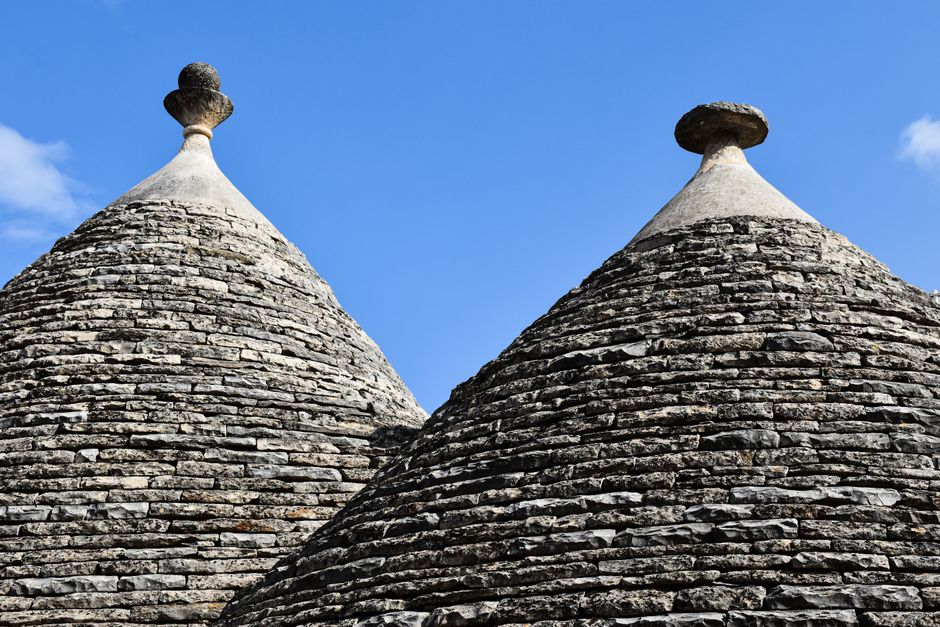
Alberobello is the essential trulli stop, but it should not carry the whole itinerary. The protected historic quarters show how the buildings cluster together, while nearby roads reveal isolated trulli surrounded by olive groves. Visit early or late in the day, then use the remaining time for a town with a different visual rhythm.
The best balance of atmosphere
Locorotondo and Cisternino are the better choices for travellers who want cafés, evening walks and fewer staged viewpoints. Ostuni wins for the largest sense of arrival, yet its slopes make it less relaxed. The practical verdict is simple: choose Alberobello for architecture, Locorotondo for views, Cisternino for local pace and Ostuni for a dramatic finale.
How should a trulli itinerary be planned?
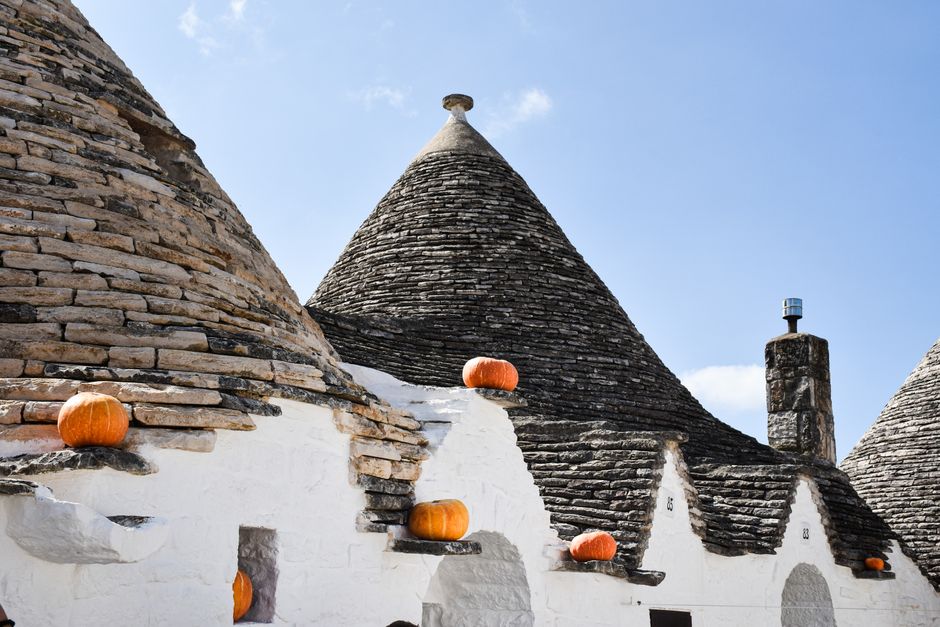
A good route starts with geography, not a list of famous names. The villages sit close together, but roads curve through farms and small settlements. Parking areas often sit outside the historic centre, and the final approach may take longer than the map suggests.
Use a three-zone route
Begin in the central Itria Valley, where Alberobello, Locorotondo, Cisternino and Martina Franca can be linked without long transfers. Add Ostuni as the eastern or southern extension rather than forcing it into every day. This creates a route with fewer repeated drives and leaves room for rural lanes, olive groves and unplanned stops. A base in the valley works best for travellers with a car, while rail users should keep the plan tighter and focus on towns with practical station links.
Build each day around one anchor town
Give the day one main village and one optional secondary stop. For example, spend the morning in Alberobello, rest during the hottest hours, then walk Locorotondo before dinner. Another day can pair Cisternino with Martina Franca. This structure protects the trip from the classic failure mode: racing through four old towns, remembering only car parks and steep streets. The anchor town receives the best light and the most energy.
Time the visit around heat and crowds
Spring and autumn usually offer the easiest walking conditions, but daylight, rain and local opening hours still shape the day. Stone streets reflect heat, and many lanes have little shade. A hat, water and shoes with grip matter more than an ambitious checklist.
The winning plan is not the one with the most pins saved on a map. It is the one that leaves enough time to notice the difference between a restored tourist lane and a functioning neighbourhood.
What should visitors expect on foot and by car?
Expect short distances to feel longer. The old centres are compact, but cobbles, slopes, stairs and limited shade slow the walking pace. A vehicle helps connect the towns, yet it creates its own problems at the edge of historic districts.
- Park outside the old centre whenever signs require it; narrow lanes are not designed for casual turning.
- Check the route before entering a village because traffic restrictions can change near historic gates.
- Allow at least 20 minutes between parking and the first viewpoint in a busy town.
- Carry water from the car, especially when visiting in July or August.
- Wear shoes with firm soles; polished stone can become slippery after rain.
- Keep luggage out of sight when the vehicle is left in an open public area.
- Plan a slower evening meal instead of trying to add another town after dark.
The car advantage
A car gives access to scattered trulli, countryside lanes and villages that are awkward to connect by public transport. The tradeoff is stress in old-town approaches. The best driving habit is to treat the historic centre as a walking destination, not as a drop-off point.
The public transport alternative
Train and bus travel can work for a focused route, especially between larger towns, but rural viewpoints and isolated trulli become harder to reach. Travellers without a car should select two or three well-connected bases rather than copy a driving itinerary.
Which popular stops should be skipped or swapped?
Is Alberobello worth visiting if crowds are a concern?
Yes, but not at midday in peak summer. The town remains the clearest place to understand the clustered trulli form, so dropping it entirely removes the main architectural reference point. Visit near opening hours for a quieter walk, then leave before the centre fills. If the lanes feel too crowded, swap a second long visit for a countryside drive near the valley.
Should Ostuni replace the smaller villages?
Only when the trip has limited time. Ostuni offers the strongest skyline and the most impressive hilltop approach, but it also demands more uphill walking and feels busier. For a two-day itinerary, it can replace Cisternino. For a longer stay, keeping both makes sense because Cisternino supplies the relaxed counterpoint Ostuni lacks.
When is a rural stop better than another town?
Choose countryside time when the schedule already includes Alberobello, Locorotondo and Ostuni. Another whitewashed centre will add fewer new impressions than an olive-grove road, a quiet masseria lane or a slow lunch outside the main tourist circuit. The strongest swap is one less checklist stop and one more open hour.
The route should be shortened whenever the weather is harsh, mobility is limited or the driver is tired. Puglia rewards attention, and exhausted sightseeing turns its best details into background scenery.
What is the best itinerary for two, three or five days?
The three-day route is the best overall choice. It gives the major trulli experience, two contrasting hill towns and enough breathing room to avoid turning every stop into a timed photo opportunity.
Two days: choose the essentials
Spend the first day around Alberobello and Locorotondo. Use the second for Ostuni, with Cisternino as an optional stop only if the morning starts early. This is the efficient version, but it requires firm decisions and little room for slow meals or countryside detours.
Three days: add contrast
Day one belongs to Alberobello and the surrounding valley. Day two combines Locorotondo with Cisternino, keeping the route compact. Day three goes to Ostuni, with time for a longer walk and a late return. This is the clearest recommendation for first-time visitors because every day has a different visual and social character.
Five days: slow down instead of collecting towns
Use the extra time for Martina Franca, a countryside morning and a repeat visit at a quieter hour. A five-day stay should not become a race through every named village. The most valuable extra is flexibility: space for weather changes, a closed site, a wrong turn or a village that deserves another hour.
The single most important takeaway is this: build a Puglia route around contrasting village experiences, not the maximum number of stops.