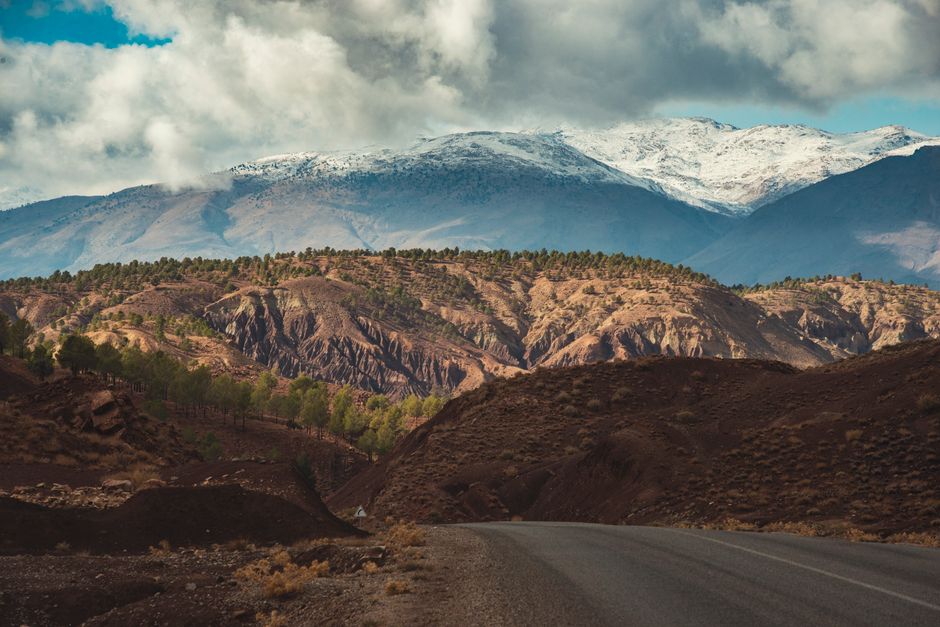
Choose the road trip route before choosing the stops
The best Morocco desert road trip starts with the route, not the destination list. The Atlas Mountains, kasbah country and Sahara edge stretch across a large area, so trying to include every famous stop creates long driving days and little time to experience any of them. A strong first journey follows a simple eastbound line from Marrakech through the High Atlas, the Draa or Dades region, and onward to the desert.
The classic route begins in Marrakech and crosses the Tizi n’Tichka pass toward Ouarzazate. From there, the road can continue to Ait Benhaddou, the Dades Valley, Todra Gorge and Merzouga. This route works best with at least five days, although six or seven gives the landscape room to breathe. A shorter trip should stop at Ait Benhaddou and one valley rather than rush all the way to the dunes.
What each route is good for
The northern desert route through Dades and Todra offers dramatic cliffs, old villages and changing mountain scenery. The southern route through Ouarzazate, Agdz and the Draa Valley feels quieter and more agricultural, with long stretches of palm groves and fortified villages. Merzouga gives the strongest classic sand-dune experience, while Zagora suits travelers who have less time and accept a smaller desert landscape.
How long the drive really takes
Map estimates often understate the day. Mountain bends, village traffic, road works, photo stops and slow-moving vehicles can add several hours. Marrakech to Ouarzazate can fill most of a day. Ouarzazate to Merzouga is another demanding journey. The clearest verdict is simple: use one major transfer per day, then protect at least one full morning for walking or exploring.
Build the itinerary around realistic driving days
A practical itinerary needs fewer hotel changes than a rushed checklist. The following plan gives a useful balance between mountain scenery, historic architecture, valley walks and desert time.
| Day | Route | Main experience | Planning note |
|---|---|---|---|
| 1 | Marrakech to Ait Benhaddou | High Atlas crossing and kasbah visit | Leave early for the mountain pass |
| 2 | Ait Benhaddou to Dades Valley | Oasis villages and rose-growing country | Allow time for roadside viewpoints |
| 3 | Dades to Merzouga | Rock formations, desert plateaus and sunset dunes | Expect a long transfer |
| 4 | Merzouga area | Dune sunrise, village visit or desert walk | Keep the day flexible |
| 5 | Merzouga to Ouarzazate or Draa Valley | Return through changing southern landscapes | Choose one overnight stop |
| 6 | Return to Marrakech | Final mountain crossing | Do not schedule a tight flight connection |
This six-day outline is the strongest choice for a first visit because it includes a real desert day instead of treating the dunes as a rushed overnight stop. A five-day version can remove the second return stop, but it should not remove the full day near Merzouga.
Expect a landscape trip, not a nonstop sightseeing tour
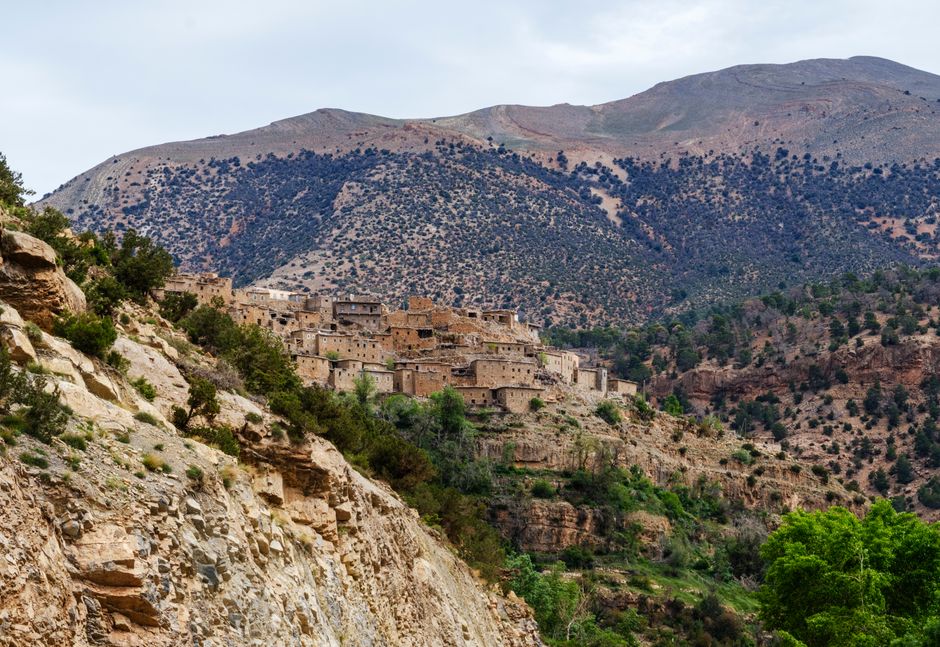
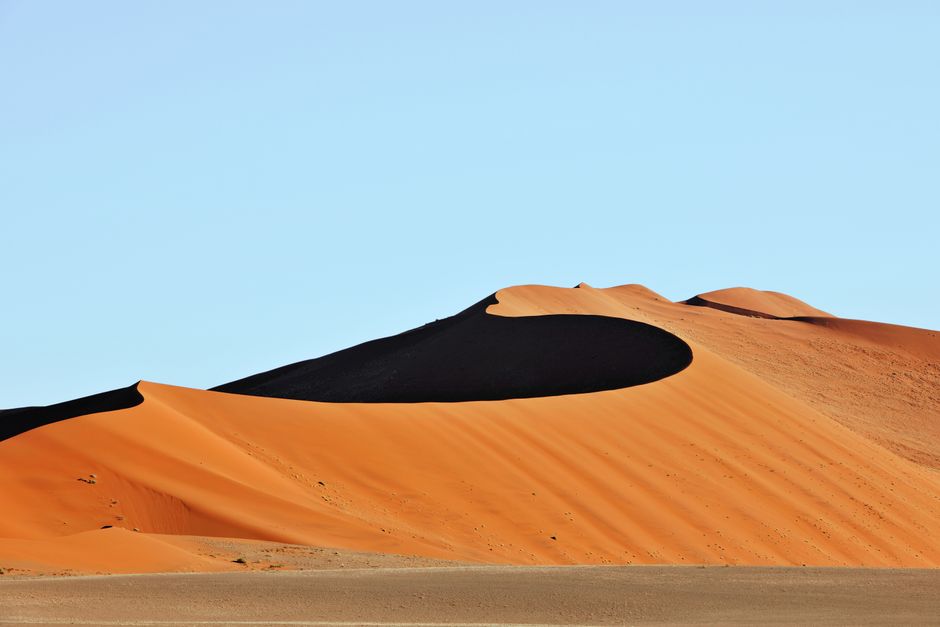
Morocco’s Atlas and desert road is best when the journey itself carries the day: a red valley opening below a mountain bend, a line of palms beside a dry riverbed, or a village appearing beyond a bare plateau. The route rewards patience more than constant activity, and the clearest plan is to leave space for the road to surprise the schedule.
Most travelers should aim for one major visit before lunch and one after lunch, with a long stop for food or walking between them; packing every hour with monuments makes the trip feel like a transfer service, while a slower rhythm gives the mountains, kasbahs and desert light enough time to become memorable.
The strongest verdict for limited time is to choose the High Atlas, Ait Benhaddou and one desert zone rather than claim to have seen all of southern Morocco, because distance is the main challenge and the best moments usually happen between the headline attractions.
Use these local habits to avoid predictable mistakes
Good preparation solves most problems on this route. Use the following rules as a working checklist.
- Start mountain crossings early. Morning light is better for views, traffic is usually lighter, and an early departure leaves room for delays near the pass.
- Carry water and small snacks. Services become less frequent between towns, especially on long desert stretches. A reusable bottle, fruit, bread and nuts are more useful than relying on the next roadside stop.
- Carry modest notes and avoid displaying large amounts.
- Ask before photographing people. Landscapes and architecture are easy subjects; residents are not scenery. A polite request matters, especially in villages and market areas.
- Dress for temperature changes. Mountain mornings can feel cold, while desert afternoons are hot. Loose trousers, a long-sleeved layer, a hat and closed shoes cover most situations.
- Do not judge distance by the map alone. A route that looks short may cross steep terrain or include narrow roads. Plan by driving hours, not kilometres.
- Keep a buffer before flights. Mountain weather, traffic and road delays can turn a return journey into a late arrival. A final night near the departure city is the safer choice.
The common failure is treating the desert as a quick photo stop. The second is booking a route with no margin for weather or fatigue. Both mistakes come from measuring success by the number of places visited instead of the quality of time spent there.
Questions that shape the desert experience
Is the Sahara hot all year?
No. Summer afternoons can be severe, but winter nights in the desert may be genuinely cold, especially in open camps. Spring and autumn usually offer the easiest balance, although evenings still need warm layers.
Is a camel ride necessary?
No. A camel ride is one way to reach a desert camp, but walking near the dunes can be quieter and more comfortable for travelers who dislike animal rides. The main experience is the landscape, sunset and night sky, not the transport method.
Should the route include mountain hiking?
Yes, if the schedule allows at least half a day. A short valley walk adds a physical connection to the Atlas that roadside viewpoints cannot provide. Travelers wanting serious trekking should plan a separate mountain trip instead of squeezing a long hike into a desert transfer itinerary.
Can the journey be done without driving?
Yes, but the route becomes less flexible. Shared transport and organized excursions can work for major stops, while private transport makes it easier to pause at viewpoints, adjust the pace and reach smaller villages. The best choice for independent exploration is a route with a local driver who knows the roads.
Know when this route is the wrong choice
The Atlas and desert road is not the best plan for every Morocco trip. Travelers with only two or three days should stay closer to Marrakech, because the long transfers will consume too much of the visit. People seeking beaches, nightlife or a relaxed city break should choose a coastal route instead. Those who struggle with winding roads may prefer a shorter mountain excursion followed by time in one base.
It is also a poor fit for anyone who wants guaranteed comfort at every stop. Rural roads can be bumpy, mobile coverage can disappear, and hotel standards vary outside the major cities. Weather can change road conditions in the mountains, while heat affects walking distances in the desert. These are normal features of the region, but they should be accepted before departure rather than discovered halfway through the route.
The clearest way to plan the trip
Choose one direction, limit the number of long transfers, and reserve a full day for the place that matters most. For a first journey, that means crossing the High Atlas, visiting Ait Benhaddou, spending time in one valley and allowing a full desert day near Merzouga. Add the Draa Valley or Todra Gorge only when the extra driving still leaves time to walk and rest.
The best recommendation is a six-day eastbound loop with early mountain departures, one full desert day and a relaxed final return. It covers the strongest landscapes without turning Morocco’s southern roads into a race against the clock.