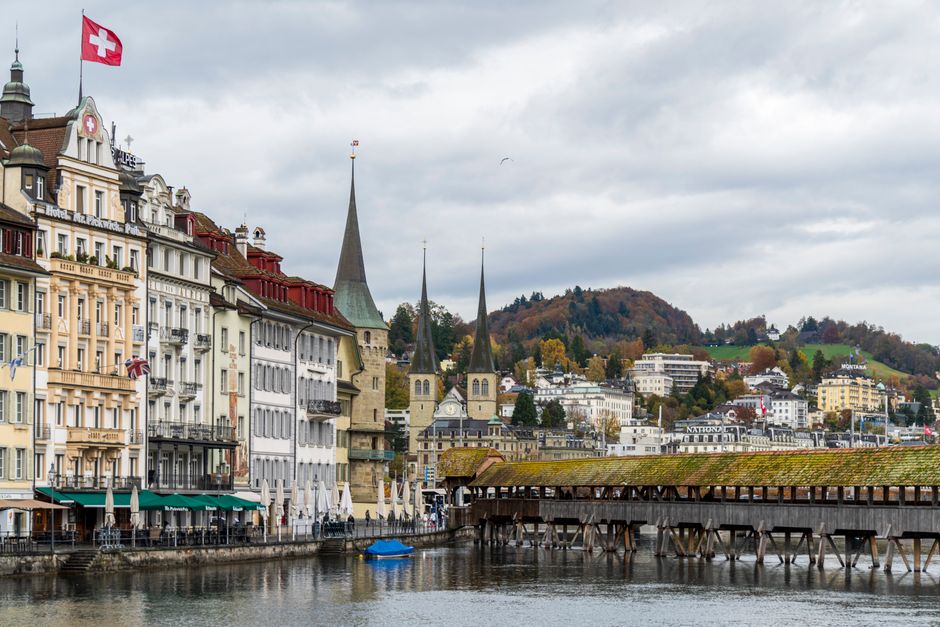
The best way to combine Lucerne and Mount Pilatus is to stay in Lucerne for two nights, explore the old town and lakefront on arrival, then dedicate the clearest day to the mountain. This keeps the route simple, leaves room for weather changes and avoids rushing between several mountain viewpoints.
The trip works well as a two-day weekend, but the timing matters. Mount Pilatus sits above the lake at more than 2,000 metres, so cloud, wind and rain can change the experience within an hour. A flexible plan is more useful than a packed one.
How many days are needed for Lucerne and Mount Pilatus?
| Day | Morning | Afternoon | Evening |
|---|---|---|---|
| Friday arrival | Travel to Lucerne and check in | Old town, riverfront and covered bridge | Lakefront walk and early dinner |
| Saturday | Mount Pilatus excursion | Mountain walk or return by boat | Lucerne old town after the day crowds |
| Sunday | Market, museum or lake promenade | Final viewpoint and departure | Travel home |
The best two-day shape
Arrive on Friday afternoon if possible. Lucerne’s historic centre is compact, and the main sights can be reached on foot from the station area. That makes the first evening useful even after a long journey. Walk along the Reuss River, cross the historic covered bridge and continue toward the lake before choosing dinner in the old town.
Why the mountain deserves a full day
A Mount Pilatus visit is not only a viewpoint stop. The journey may combine a boat, a mountain railway, a cableway or local bus connections, depending on the chosen route. Each leg adds scenery but also creates timing risks. Allow at least six hours from Lucerne and keep the return journey unhurried. A shorter visit can work in perfect weather, but a full day gives time for a walk, a slower descent and a change of plan if visibility falls.
How to plan the Mount Pilatus route without wasting time
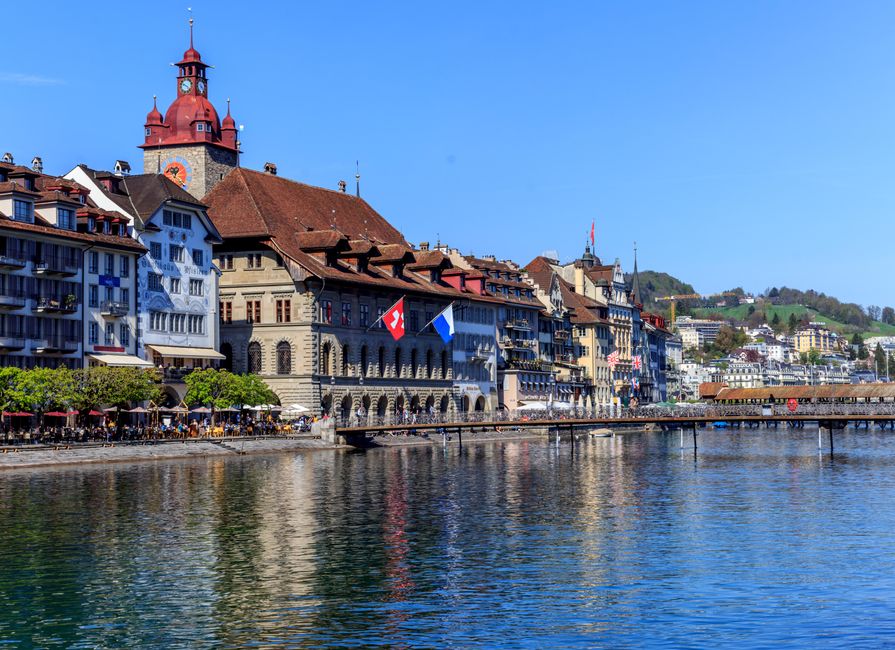
Use the clearest available day for Mount Pilatus. The mountain is the part of the weekend most affected by weather, while Lucerne remains enjoyable in light rain. Check the mountain forecast and operating notices after breakfast, then commit to the route.
- Start early. Leave Lucerne in the morning, before the busiest sightseeing period. Early travel also creates a buffer if a connection is delayed.
- Choose one main ascent route. The route through the lake and mountain railway offers a classic scenic journey. The route using road transport and cableway connections is usually more direct. Mixing every available option can turn a simple excursion into a timetable exercise.
- Reserve time at the summit. Allow 60 to 90 minutes for the main viewpoints, photographs and a short walk. Strong wind or low cloud may reduce the walking time.
- Keep the descent flexible. Do not schedule a final museum visit or tight departure immediately after returning. Mountain transport can run more slowly during busy periods or poor conditions.
- Carry the right layers. Lucerne can feel mild beside the lake while the summit feels cold and exposed. A waterproof outer layer, warm mid-layer, sunglasses and sturdy shoes are more useful than a large suitcase of clothing.
The simplest route choice
For a first visit, the best route is the one with the fewest changes that still includes a scenic section. A route with one boat journey and one mountain ascent feels memorable without demanding constant timetable checks. Travelers who value speed should choose the most direct road-and-cableway combination instead.
The mistake that causes most delays
Waiting until late morning to decide on the mountain is the common failure point. If clouds arrive, there may be no useful alternative slot.
What to expect on Mount Pilatus in changing weather
At the lake and lower slopes
The first part of the journey may feel relaxed and almost urban. Lake Lucerne sits at a much lower elevation than the summit, so temperature and visibility can change as the route climbs. The lower slopes may be green and bright while the upper station sits inside cloud. That contrast is normal, not a sign that the forecast was completely wrong.
On a clear day, the views stretch across the lake, nearby valleys and a wide sweep of Alpine peaks. The landscape is the main reason to take the longer scenic route. On a cloudy day, the journey still has value, but the summit becomes more about the atmosphere, short walks and the engineering of the ascent.
At the summit
The summit area is exposed. Wind can make the temperature feel much lower than in Lucerne, and wet paths can become slippery. Stay on marked routes, especially near steep edges and rocky sections. A short walk is enough for most visitors; the goal is to gain a clear viewpoint, not to turn a weekend excursion into a demanding mountain trek.
Allow time for the body to adjust to the elevation. Walk slowly after arriving, drink water and avoid treating the summit like a quick platform beside the lake. People who are sensitive to heights may prefer the wider paved viewpoints rather than narrow ridge paths.
When the mountain is the wrong choice
Skip the summit if the upper forecast shows persistent cloud, strong wind or unsafe conditions. A high ticket does not create a view. Lucerne’s lakefront, historic centre and museums provide a stronger day than standing in fog while watching the clock. The mountain can be attempted on the next morning only if the departure schedule allows a proper buffer.
What should be done in Lucerne beyond the main sights?
Is the old town enough for one evening?
Yes, for most short visits. Start at the river, then follow the lanes through the historic centre toward the lake. The covered bridge is most atmospheric in the early evening, when the light softens and day visitors begin to leave. Add one church, square or viewpoint rather than trying to enter every attraction.
Where is the best place for a slower morning?
The lake promenade is the strongest choice. It provides open views, benches and an easy route back toward the station. A slow walk along the waterfront balances the busier mountain day and works in weather that is too uncertain for a high-altitude excursion.
What works in rain?
Use the rainy period for a museum, historic interior or long café stop, then walk the river when the showers ease. Heavy rain is a poor reason to force a lake cruise or mountain ascent. The city is compact enough to combine indoor stops with short outdoor sections, so the day does not need a strict timetable.
The best verdict for a Swiss weekend
For first-time visitors
Stay in Lucerne for two nights and give Mount Pilatus the clearest full day. This is the strongest balance of scenery, transport simplicity and time in the city.
For limited daylight
Choose Lucerne over the mountain if only one short day is available. The old town, river and lakefront deliver more reliable experiences without depending on mountain visibility.
For changeable forecasts
Keep the itinerary open until the morning, but set a firm decision time. Lucerne rewards a flexible plan; Mount Pilatus rewards an early start and clear weather.