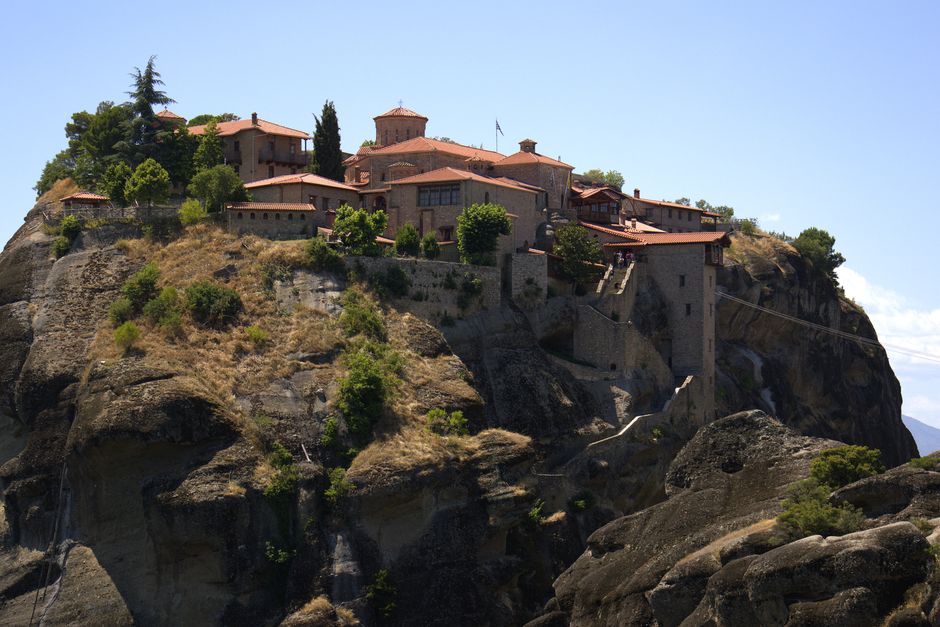
Six Greek Orthodox monasteries still stand above the rocks of Meteora, where vertical sandstone pillars rise from the plain near Kalambaka. The landscape feels impossible from the road, but the visit becomes much easier with a clear route, sensible timing and realistic expectations.
How to plan a first visit to Meteora
The best first visit lasts two full days. That gives enough time for monasteries, viewpoints, village streets and one short walk without turning the trip into a race. Meteora can work as a day trip, but a rushed schedule often means missed interiors, crowded stairways and no quiet time among the rocks.
Choose Kastraki or Kalambaka as the base
Kastraki sits closer to the rock formations and several walking paths. It suits travelers who want early views, village atmosphere and quick access to the monastery road. Kalambaka has the main rail and coach connections, more everyday services and a wider choice of places to eat. For a first visit, Kastraki is the stronger choice for scenery; Kalambaka is the simpler choice when arrival and departure times matter most.
Build the day around opening days
The six monasteries do not all open on the same day, and each follows its own weekly closure pattern. Seasonal hours also change. Check the current schedule shortly before departure and mark two or three monasteries that are open on the intended day. Treat the schedule as the backbone of the itinerary, not as a detail to check after arrival.
Pack water, sun protection, a light layer and clothing that covers shoulders and knees. Some entrances provide wraps, but a personal scarf and longer trousers make the visit smoother. Comfortable shoes matter more than fashionable clothes because stone paths, uneven steps and steep approaches are part of the experience.
Which Meteora route works best for a two-day itinerary?
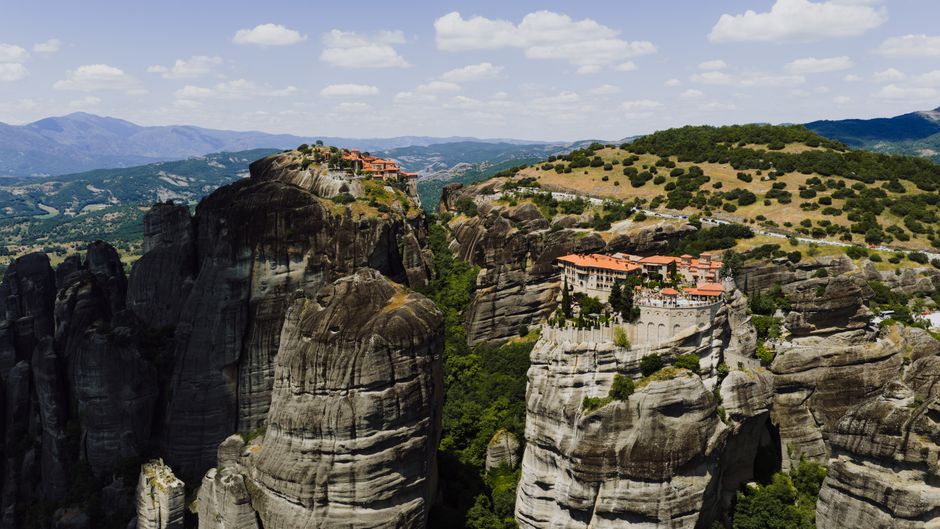
A two-day plan should mix one early monastery visit, one walking section, a long pause and a sunset viewpoint. The strongest route avoids trying to enter every monastery. Three interiors, several viewpoints and time in Kastraki usually create a fuller experience than six hurried stops.
Suggested two-day schedule
| Time | Day one | Day two |
|---|---|---|
| Early morning | Walk through Kastraki and follow a signed trail near the rock towers. | Visit the first open monastery soon after opening. |
| Late morning | Explore a second monastery before the busiest period. | Visit a third monastery with a different setting and viewpoint. |
| Afternoon | Rest, eat locally and leave time for weather changes. | Take a longer walk or return to the village for a slow meal. |
| Sunset | Use a signed viewpoint or safe roadside pull-off. | Choose a quieter overlook away from the main parking areas. |
Match the route to the season
Spring and autumn are the easiest seasons for walking because temperatures are often more comfortable and the rock landscape has stronger color. Summer demands an earlier start, especially for exposed paths. Winter can bring cold wind, wet stone and shorter daylight, but the monasteries and cliffs may feel more peaceful. Fog is not a failure; it can hide the plain while leaving the highest pinnacles floating above the cloud.
Allow more time than the driving distance suggests. Roads curve around the pillars, parking areas fill quickly and a short-looking approach can include many stairs. Never stop on a blind bend for a photograph. Use a marked parking area or a signed viewpoint, then walk the final distance.
What should be skipped on a first Meteora trip?
Skip the attempt to see all six monasteries in one day. The better choice is two or three interiors plus time outside them. Meteora is a place of scale, silence and changing light; a checklist-only visit misses the reason the landscape is memorable.
Choose depth over a monastery count
Great Meteoron offers the largest historical complex and a strong introduction to the monastic story. Varlaam combines a dramatic position with a demanding approach. St Stephen is easier to reach than several others and can suit visitors who need fewer stairs. Rousanou, St Nicholas Anapausas and Holy Trinity each offer a different relationship between rock, path and building, but access and opening days vary.
Allow space for the unexpected
Cloud, heat, road traffic or a closed entrance can change the plan. Keep one flexible block each day instead of booking every hour. If a monastery is closed, use the time for a village walk, a viewpoint, a short trail or a quiet stop beneath the cliffs. The most useful local tip is simple: leave room for the landscape to set the pace.
Visitors with limited mobility should not assume that every monastery is reachable in the same way. St Stephen generally involves a bridge approach rather than a long stair climb, while other sites require uneven steps. Confirm access conditions directly before traveling and select viewpoints that can be reached safely by road.
What should visitors expect inside the monasteries?
Meteora is a religious site first and a sightseeing destination second. The interiors contain chapels, frescoes, manuscripts, courtyards and small museums, but access may feel narrow or quiet rather than museum-like. Photography rules can differ between outdoor areas, chapels and exhibits.
What clothing and behavior are expected?
Cover shoulders and knees before entering. Speak quietly, follow signs and avoid photographing worshippers during services. A monastery may close part of the complex for prayer even when the main entrance remains open. Ask before photographing people, religious objects or ceremonies. These small choices show respect and prevent an uncomfortable visit.
How difficult are the stairs?
The effort varies sharply. Some sites use a short bridge or manageable approach; others require long stairways cut into the rock. Take the ascent slowly, especially in warm weather. Carry water in a small day bag and keep both hands free for railings. Flip-flops and smooth-soled shoes are poor choices on worn stone.
Expect a mix of grandeur and restriction. The best view may be outside the building, while the most meaningful detail may be inside a dim chapel where photography is limited. Plan for both experiences instead of treating the monasteries as identical viewpoints.
Which local mistakes can ruin a Meteora visit?
The common mistakes are easy to prevent, but they usually come from treating Meteora like a standard city attraction.
Avoid these five planning errors
- Ignoring closure days: check the official schedule shortly before each visit and keep a backup monastery.
- Arriving at midday: begin early for cooler paths, easier parking and softer light.
- Underestimating stairs: wear secure walking shoes and carry water even for a short monastery stop.
- Planning only photographs: add time for the village, a trail or a quiet viewpoint beneath the cliffs.
- Relying on a perfect forecast: pack a light waterproof layer because mountain weather can shift quickly.
Know when a day trip is the wrong choice
A day trip is a poor fit when arrival and departure consume most of the daylight, when several travelers need a slower pace or when the weather forecast looks unstable. Staying overnight creates room for sunrise, sunset and a second chance after a closure. It also reduces the pressure to drive tired on winding roads.
Meteora rewards a slower plan: one open door, one good trail, one safe viewpoint and enough silence to notice how the cliffs change color. That approach turns a famous stop into a richer part of a wider Greek journey, and the monasteries will keep offering new details long after the first visit ends.