The common mistake is treating Bordeaux as a wine-only destination. The city works better as a compact two-day break built around the Garonne riverfront, the historic centre and one carefully planned trip to Saint-Émilion. Trying to fit every museum, village and vineyard into the same weekend creates more time on transport than time enjoying the place.
The best split is one full day in Bordeaux and one day shared between Saint-Émilion and the city. That gives enough room for grand squares, narrow streets, market food, river views and the limestone village without turning the itinerary into a checklist.
How much of Bordeaux fits into two days?
Two days are enough for Bordeaux’s central sights, but not enough for the entire wine region. That is a useful limit, not a problem. Most of the historic centre is walkable, and the main sights sit close together between the river and the cathedral. The city rewards slow movement: a short walk often reveals a better view than another scheduled stop.
What belongs on the first visit
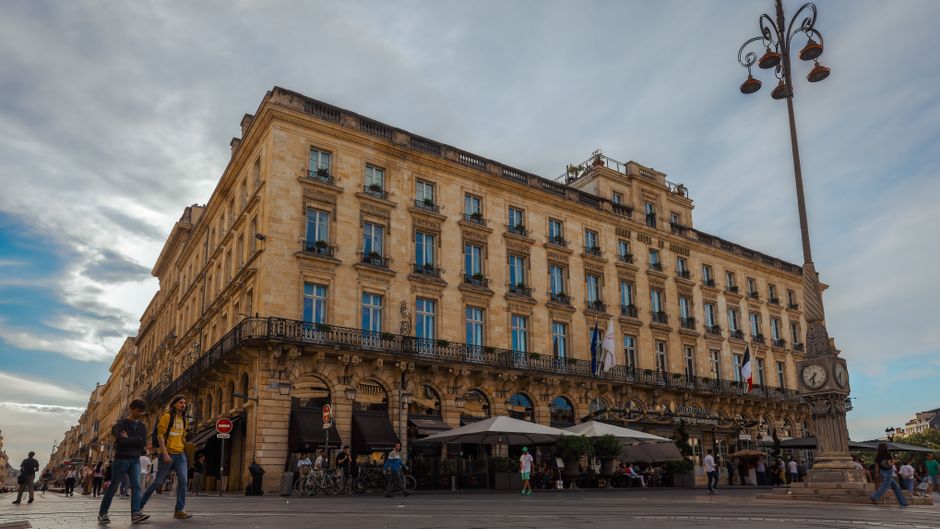
Prioritise the Garonne riverfront, Place de la Bourse, the water mirror, Porte Cailhau, the Grosse Cloche, Cathédrale Saint-André and the lanes around Saint-Pierre. These places explain Bordeaux’s shape and history. The riverfront shows the city’s trading past, while the old town reveals its medieval street plan and later classical architecture.
What should be left out
Do not add several distant estates, a long museum tour and Saint-Émilion to the same day. The result sounds ambitious but feels rushed. A second vineyard village is also a weak trade-off for a short visit. Saint-Émilion already provides the strongest contrast with Bordeaux: a small hilltop settlement, monolithic underground spaces and a rural setting after a dense urban morning.
Day one itinerary: riverfront, Chartrons and the old town
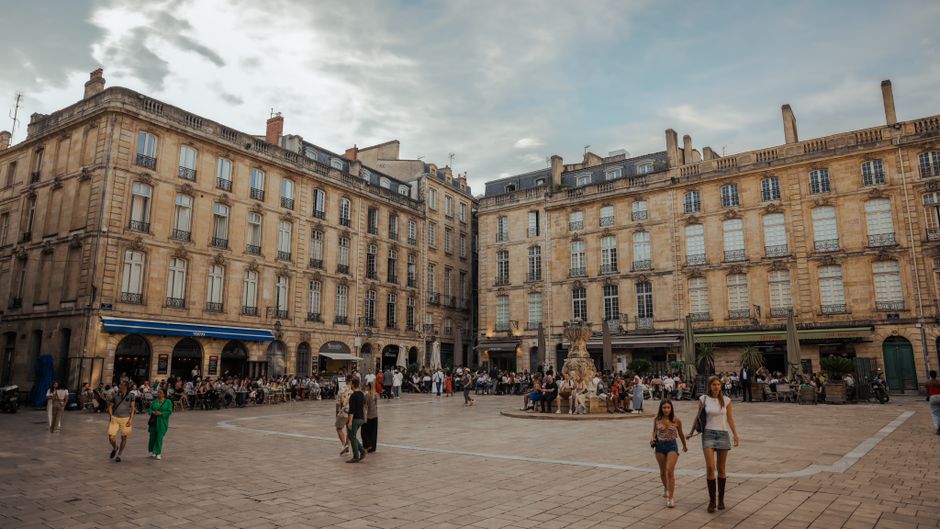
The first day should stay mostly within central Bordeaux. Start early enough to see the riverfront before the busiest walking hours, then move inland through the historic streets.
| Time | Area | What to do |
|---|---|---|
| 08:30–10:00 | Garonne riverfront | Walk from Pont de Pierre toward Place de la Bourse and pause at the water mirror. |
| 10:00–12:00 | Saint-Pierre | Explore Porte Cailhau, nearby lanes and the main squares on foot. |
| 12:00–14:00 | Historic centre | Take a long lunch and avoid scheduling a major attraction immediately afterward. |
| 14:00–17:00 | Cathedral and Chartrons | See Cathédrale Saint-André, then walk north toward Chartrons. |
| 17:00–20:00 | Riverfront or old town | Choose a relaxed evening walk, local meal and early night before Saint-Émilion. |
Place de la Bourse is best viewed from the river side, where the symmetrical façades make sense as one composition. From there, the old town is only a short walk away. Allow time for detours around Saint-Pierre rather than moving directly between landmarks.
Chartrons adds a different mood: wider streets, former merchant buildings and a less formal pace. It is a good late-afternoon choice because it prevents the day from becoming a sequence of famous façades. The clear verdict for day one is simple: walk the central core, take one substantial break and keep the evening flexible.
Day two: how to visit Saint-Émilion without rushing
Saint-Émilion works best as a half-day or full-day excursion, depending on the pace of the visit. The village is close enough to Bordeaux for a practical day trip, but the station is outside the historic centre and the approach includes an uphill walk. Build that transfer into the plan instead of treating it as a minor detail.
- Check the return transport before leaving Bordeaux. Services are not evenly spaced throughout the day, and missing the intended return can remove several hours from the visit.
- Arrive with a route, not a rigid timetable. Begin in the village centre, then follow the lanes toward the upper viewpoints and the main church area.
- Book underground or guided visits ahead when required. Access to the monolithic church and underground spaces may follow timed entry rules, so availability should be checked before travel.
- Wear shoes with firm grip. The village has steep sections, uneven stone surfaces and steps that become tiring after several hours.
- Leave time for the landscape outside the core. The vineyards surrounding the village are part of the experience. A rushed loop through the centre misses the setting that makes Saint-Émilion different from Bordeaux.
- Return before the final connection becomes the only option. A late departure may look efficient but leaves little protection against delays or a missed walk to the station.
The main trade-off is clear. A guided visit gives more historical context and less planning work, while an independent visit allows more freedom but demands careful timing. For a first trip with only two days, the best choice is a pre-booked visit combined with unstructured village walking. Do not force a second wine stop into the afternoon. The village, views and historic spaces already fill the day.
What do first-time visitors get wrong?
Bordeaux is easy to navigate once the main constraints are understood. Most disappointing visits come from small planning errors rather than from a lack of attractions.
Is the city centre walkable?
Yes. The central sights are close enough to connect on foot, and walking gives a better sense of the old town than moving between isolated stops. Public transport is most useful for reaching accommodation outside the centre, the station or Chartrons after a long day.
Should Saint-Émilion be visited on the first day?
No. Keep it for day two when the city’s main landmarks are already covered. Arriving in Bordeaux and immediately leaving for the countryside creates unnecessary pressure, especially after luggage collection and accommodation check-in.
What weather problem needs a backup plan?
Rain can make the stone streets and steep lanes uncomfortable, while strong sun makes the exposed riverfront tiring. Keep one indoor option available, such as a museum, cathedral visit or extended lunch. The right backup is flexible, not a packed substitute schedule.